
Welcome to the Levinson Family Walking Tour!

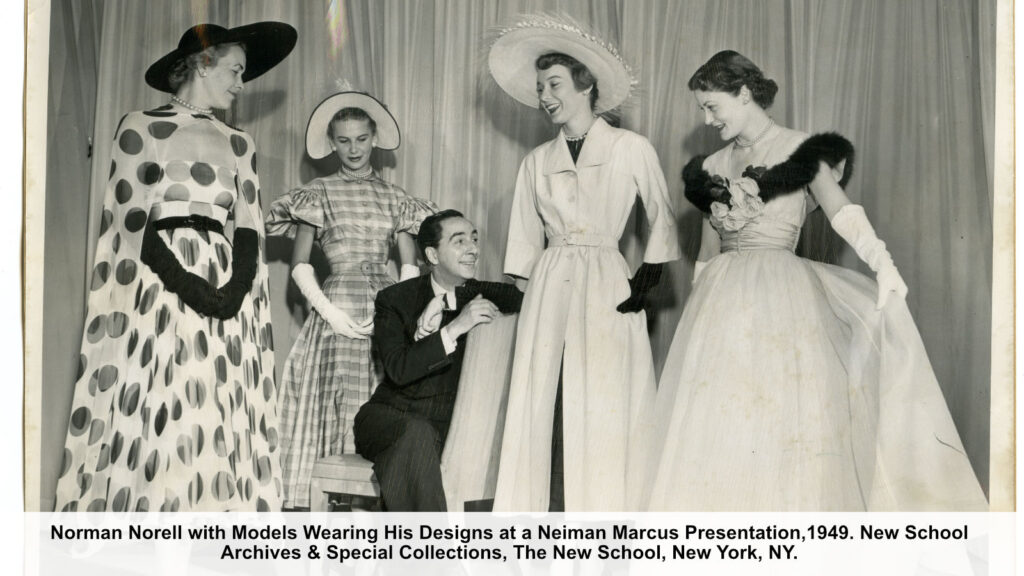
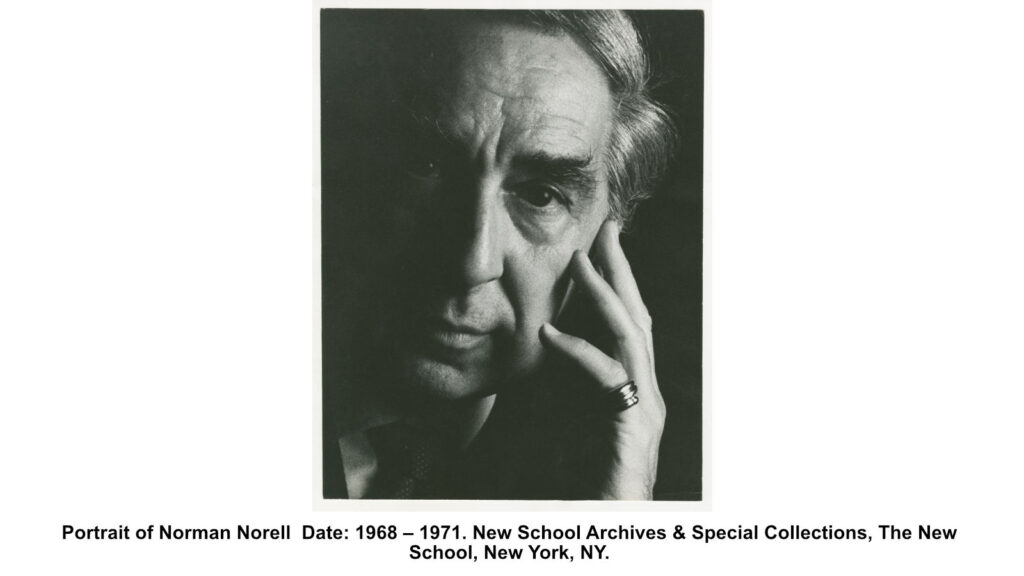
Hello and welcome to the “Noblesville Icons: Levinson Family Walking Tour”; in which we will point out a number of notable buildings and landmarks here in Noblesville Indiana and highlight their connections to Norman Norell Levinson, the “Dean of American Fashion”, and his influential and civic-minded family – The Levinsons.

Nickel Plate Line Separator
Family Image

Meet the Levinson Family

album-art
00:00
Hide TranscriptShow Transcript

Meet the Family

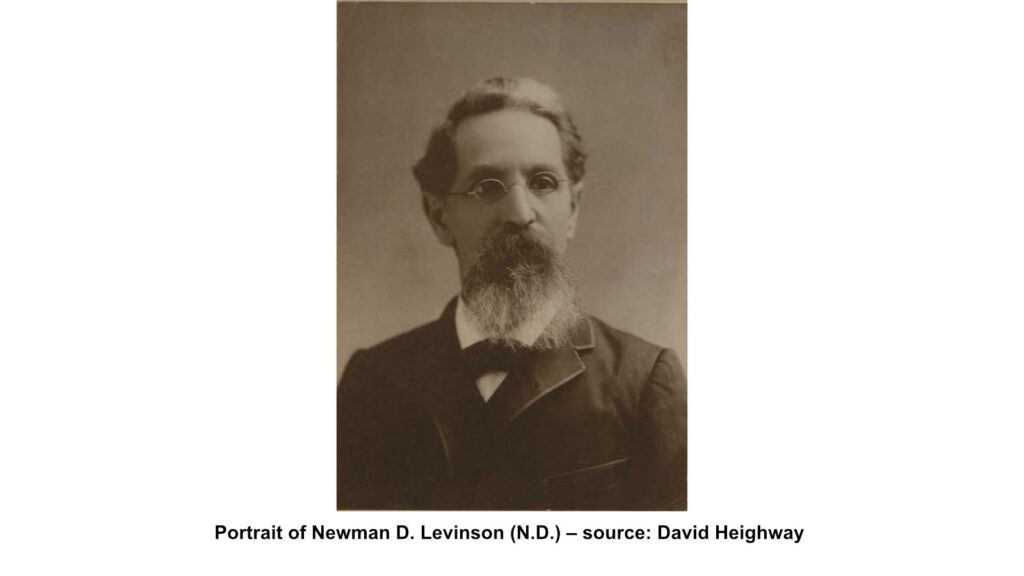
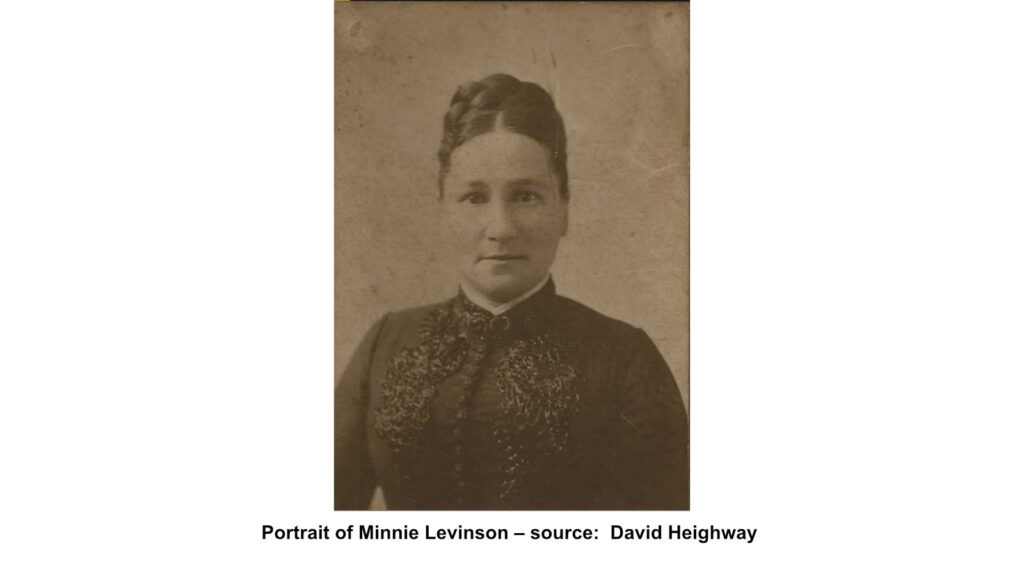
Let’s meet this inspiring family before we begin our journey. To help you along, we will refer to family members by their relationship to Norman Norell Levinson.

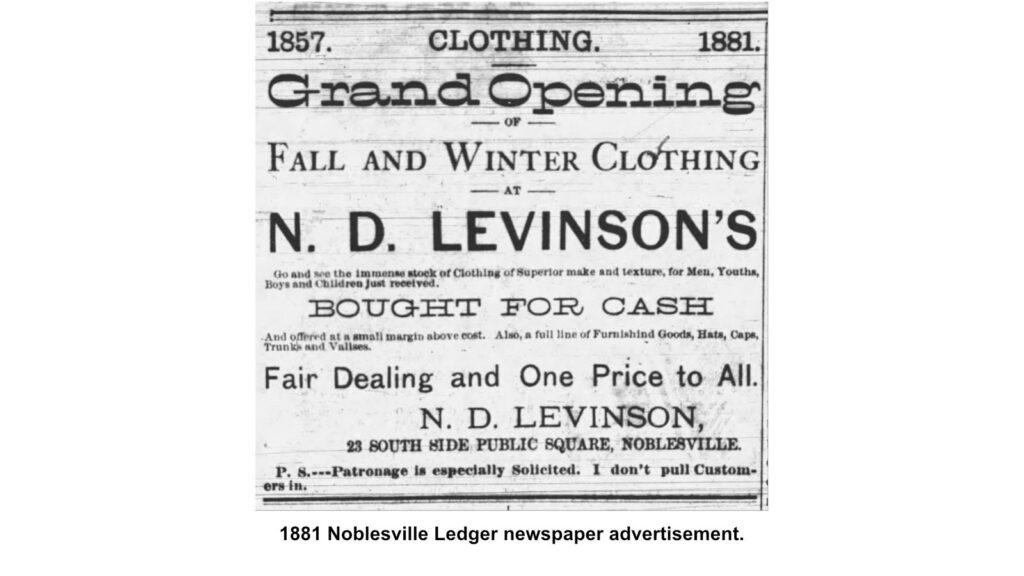
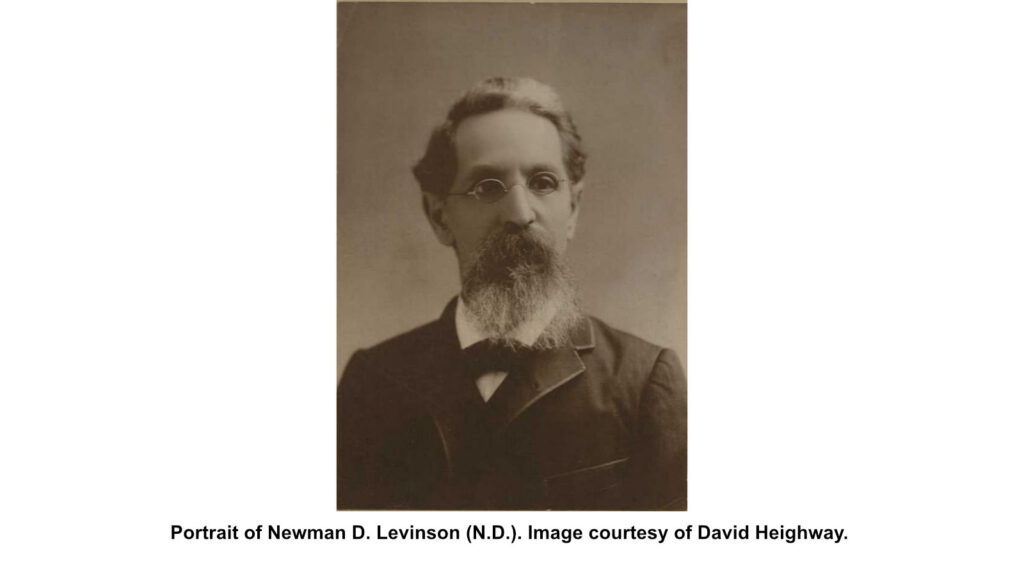
Grandpa Newman David Levinson, better known as N. D., ran successful clothing stores in Noblesville, touching off this influential family’s connection to fashion.
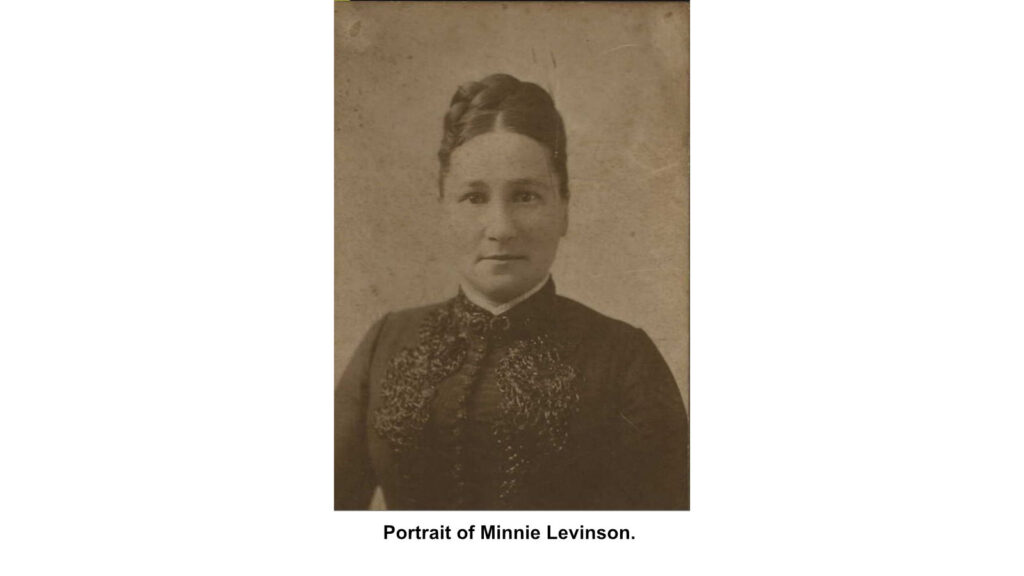
Grandma Minnie Levinson was known as a social crusader and was named the permanent head of the Noblesville Ladies Aid Society.

Because N.D. and Minnie were very community-minded and instilled the importance of education, charity, and community involvement, those ideals continued to be passed on through multiple generations of Levinsons in ways that are still positively impacting Noblesville today! “Minnie spent much of her time giving food and clothing to the poor and caring for the sick. She also worked extensively with the Ladies Aid Society on several projects, including keeping the library open.”

According to Hamilton County Historian, David Heighway, “N.D. was highly respected and, while he was never elected to office, his advice was sought on political matters and he was also involved in local fraternal organizations in Noblesville.”

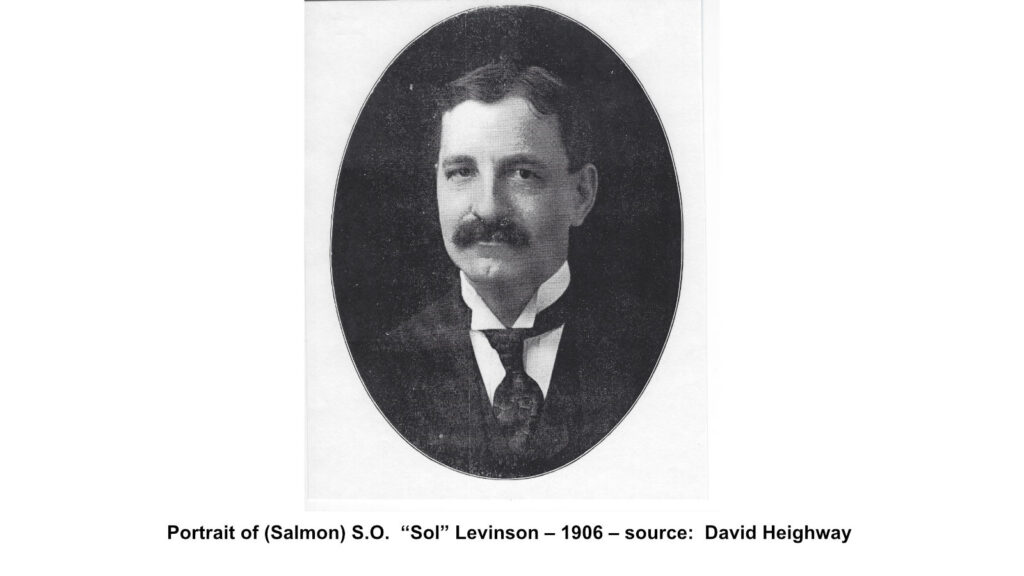
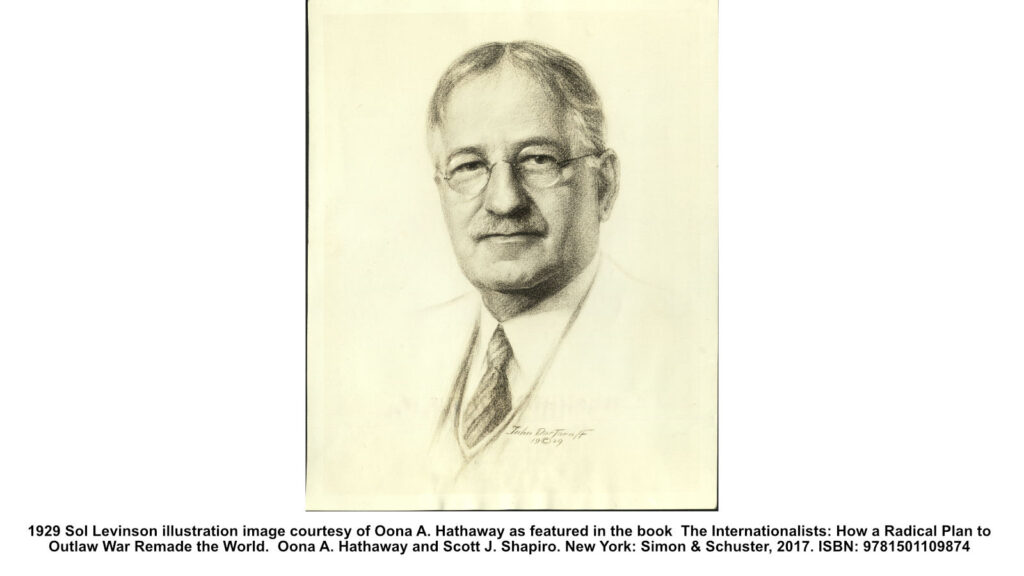
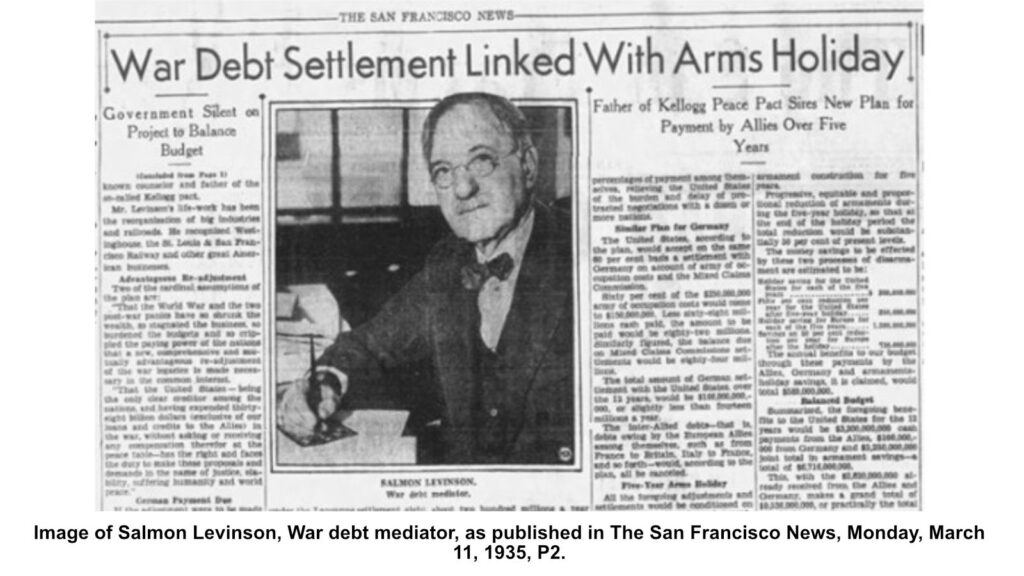
As far as the Levinson family was concerned, Uncle Salmon Oliver (S.O.), better known as Sol, has an exceptional story of his own. As a Noblesville student, he excelled and graduated at the age of 16. Sol was also a leading member of the local baseball team in the 1880’s. He married his first wife Helen Haire/Hare in 1884. Sol graduated from Yale in 1888, received his LLB from Lake Forest University in 1891, and was admitted to the Illinois Bar that same year. Sol practiced law in Chicago and did quite well.

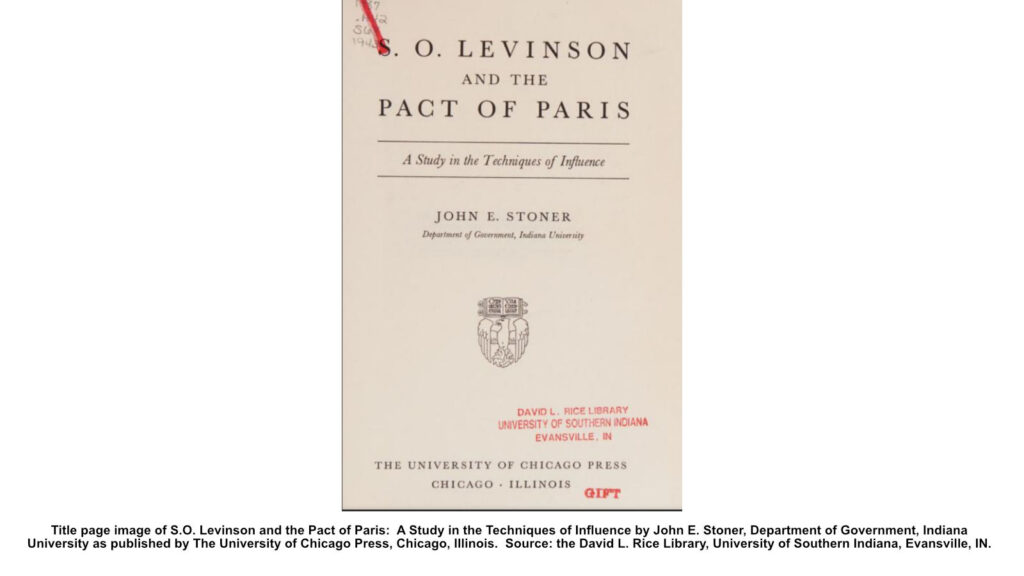
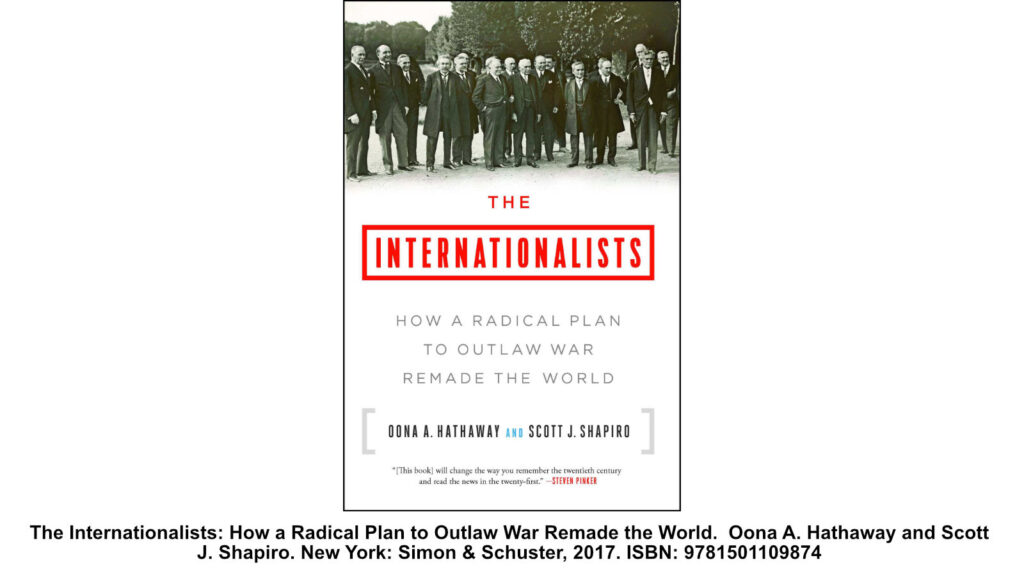
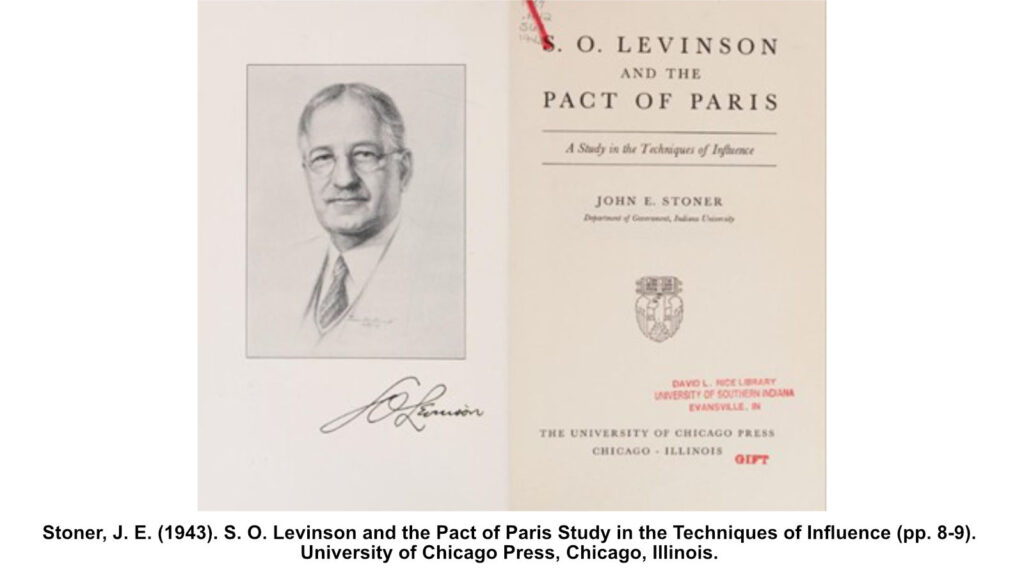
Sol Levinson was most famous for his work in the concept of outlawing war. Sol wrote most of the text of the document known as the Kellog-Briand Pact or Pact of Paris in which signatory nations promised to renounce war as an instrument of national policy and settle disputes peacefully. For this work, Sol was nominated for the Nobel Peace Prize in 1929.

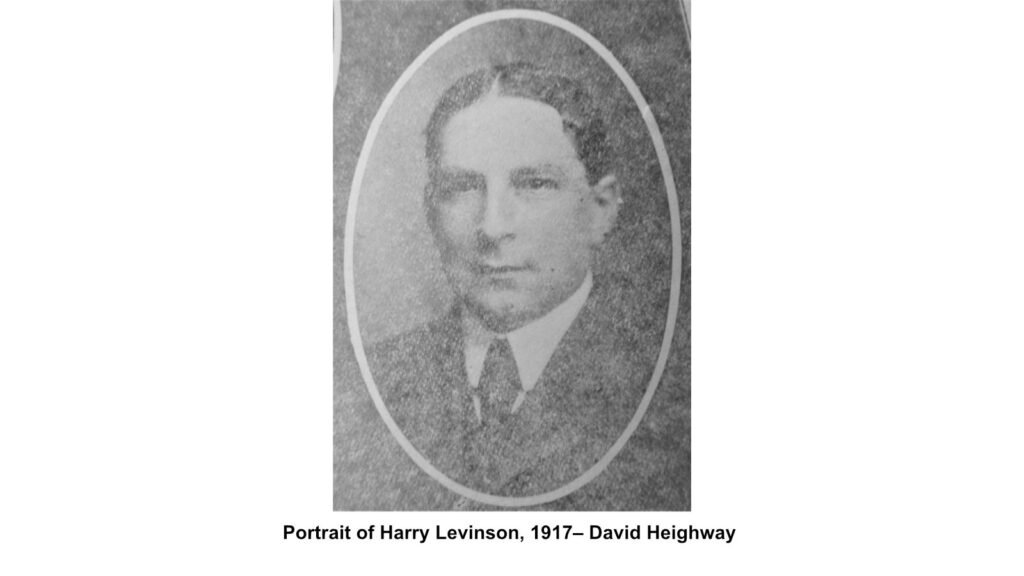
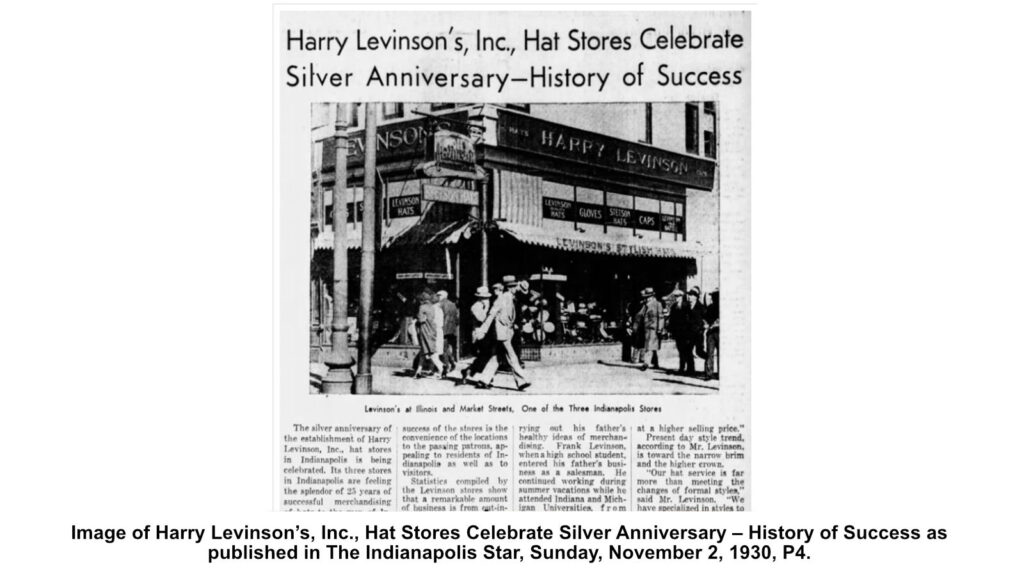
Father Harry Levinson ran the family clothing business, eventually moving the Harry Levinson Men’s Shop and his family to Indianapolis.

Brother Frank Levinson continued to run the family clothing store after his father’s passing.

Head to 835 Conner Street for the first stop and to learn more about Norman’s grandparents and the beginnings of the clothing business.

Nickel Plate Line Separator
Tour Map Image

Levinson Walking
Tour Map

If viewing the map on a mobile device, please use two fingers to zoom in or out (pinch and zoom).

Nickel Plate Line Separator
Stop 1 Image

STOP 1
835 Conner Street

album-art
00:00
Hide TranscriptShow Transcript

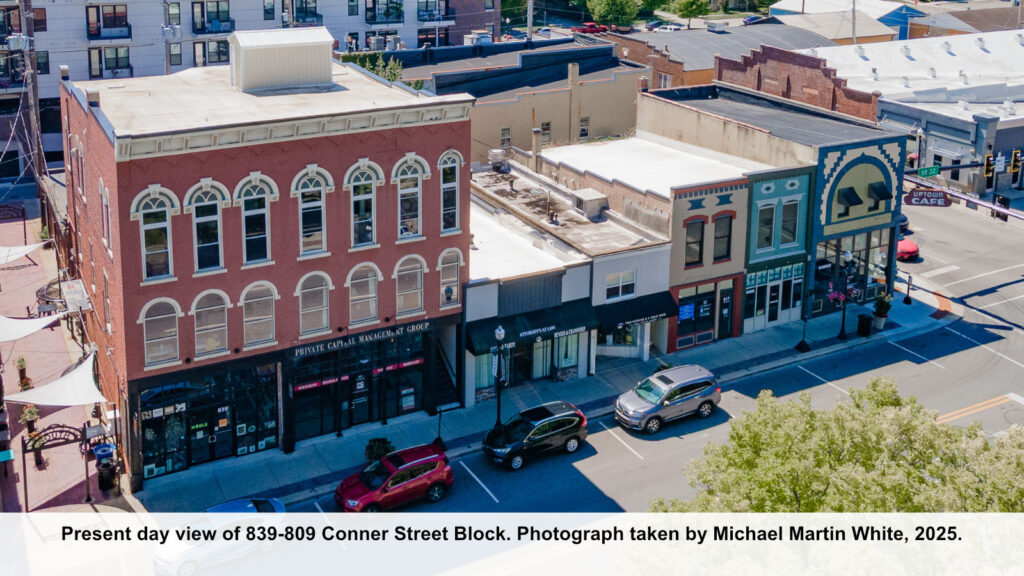
Stop 1 – The Grand/Private Capital Management Group (835 Conner Street)

Known as “The Grand”, 835 Conner Street was the second location of N.D. Levinson’s successful clothing business. N.D. moved his business into the center section of this building in the year 1884. Although N.D. Levinson died in 1899, his son Harry, Norman Norell’s father, continued to run the store at this location until he sold it in 1905 and moved to Indianapolis.

This Italianate building was constructed in 1869 as the Miesse Block. Spanning the addresses of 829 to 839 Conner Street, this building originally had a three-story center section with two-story wings on either side. N.D.’s success and influence was such that his fellow “Odd Fellows Lodge” members banded together after his death in 1899 to expand the entire building into three stories in 1900.

At the next stop, 823 Conner Street, you will encounter the first location of the Levinson Family clothing business.

Nickel Plate Line Separator
Stop 2 Image

STOP 2
823 Conner Street

album-art
00:00
Hide TranscriptShow Transcript

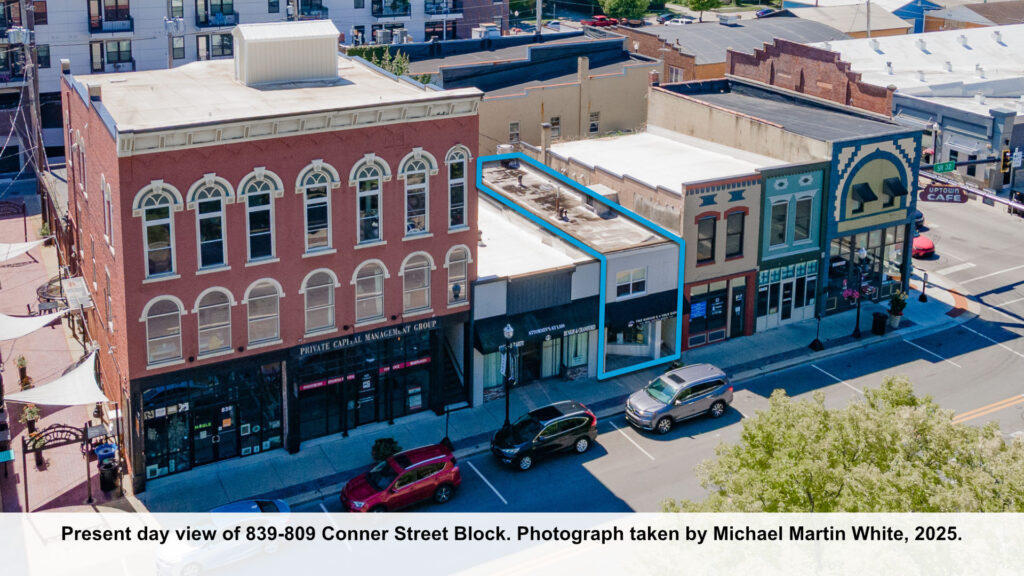
Stop 2 – Levinson Tailor Shop/Sauce & Tardy Law Office (823 Conner Street)

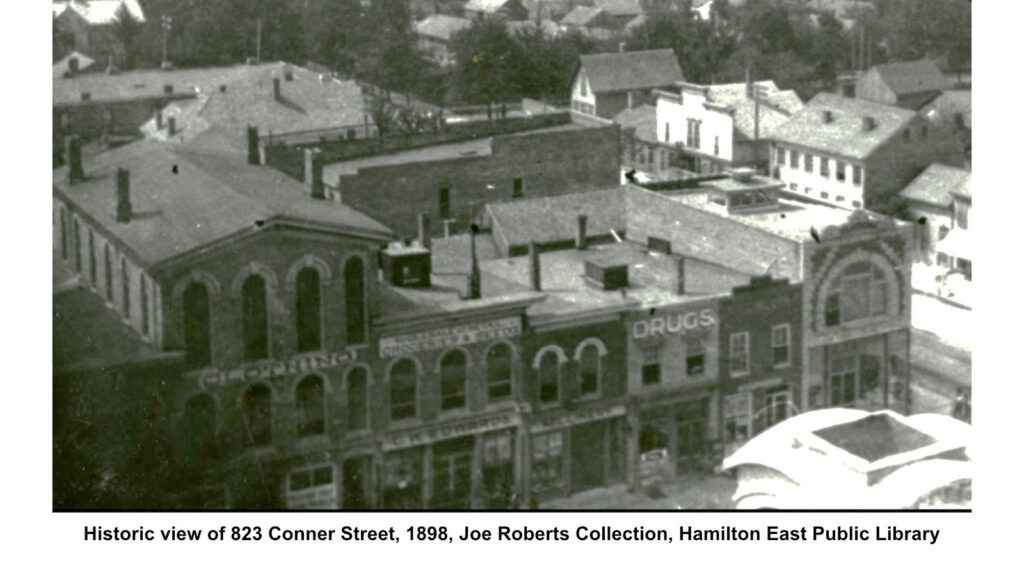
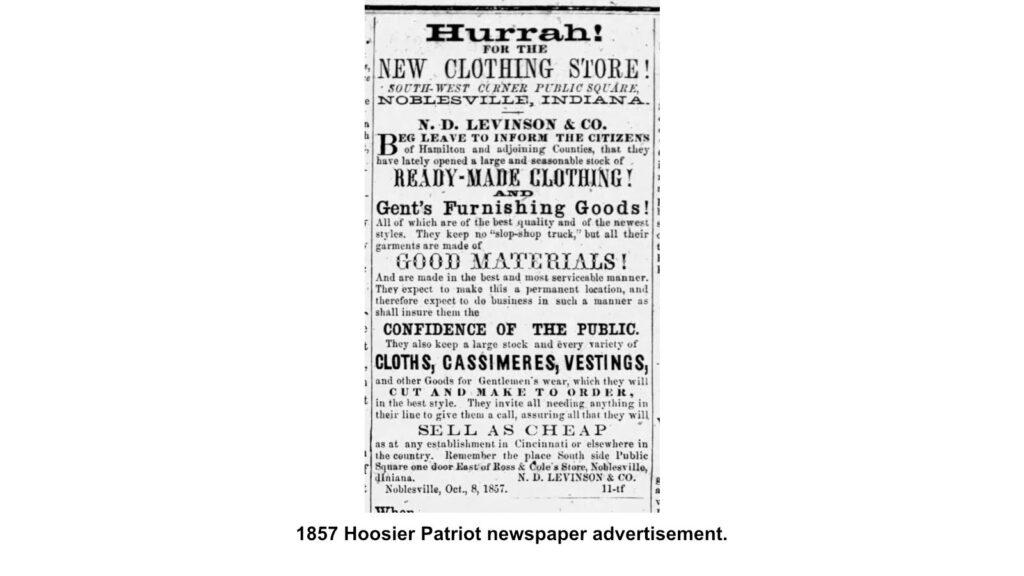
823 Conner Street was the humble beginnings of N.D. Levinson’s tailor shop and home in 1857. It is exciting to think that the work in this small tailor shop could have eventually inspired designs that rivaled Paris fashion!

The tailor shop was on the first floor and the family actually lived on the second floor. This is where the business and family resided for a number of years. However, in the 1870’s, N.D. purchased a home in Noblesville to raise his young family and to accommodate a business that had quickly expanded beyond tailoring to include clothing sales. This simple clothing business inspired the career path that led to Norman Norell being called the “Dean of American Fashion”.

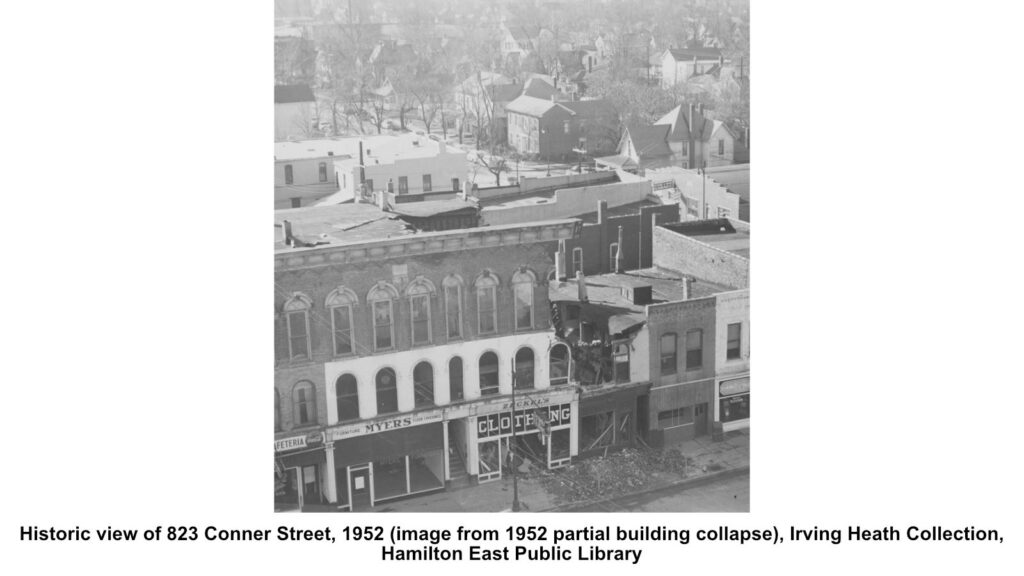
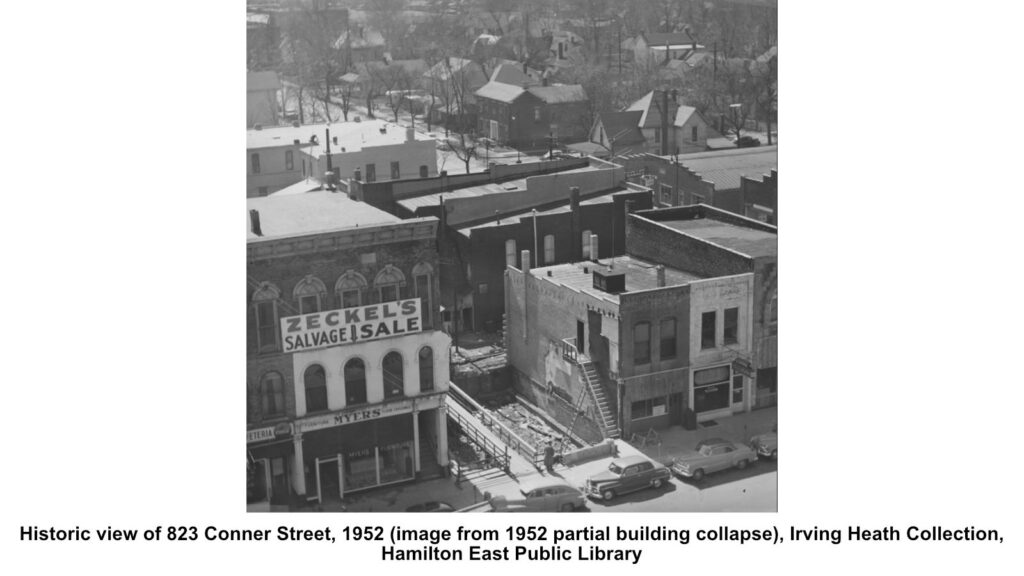
Also worth noting, the building as you see it today is smaller than its original version. The western part of the building partially collapsed in the 1950s and the remaining portions were closed off to form what you see today.

The story of this civic-minded family begins at the next stop, the Levinson Homestead at 54 South Eight Street.

Nickel Plate Line Separator
Stop 3 Image

STOP 3
54 South 8th Street

album-art
00:00
Hide TranscriptShow Transcript

Stop 3 – The Levinson Homestead/Levinson Building (54 S. 8th Street)

This is the site of the Levinson Homestead, the spot where this hard-working family’s influence grew; shaping the workings of Noblesville and providing inspiration, charity, and fun for all levels of society.

According to records, Polk Street (what is now called 8th Street) was the main thoroughfare in town in Noblesville’s earliest days. Most of the city’s founding fathers had built homes along the road. It was in the 1840’s that Noblesville Judge William Garver originally built a wooden house on this site that the Levinsons later purchased.
Although N.D. Levinson’s 1899 obituary noted that he built the house in 1867, historical records seem to show that the Levinsons actually moved into the home in 1867… and most likely “built on” –made renovations — to the home.

Newspaper records indicate that in its heyday, the Levinson Homestead, “was at one time the center of many social events and charity programs.” After Minnie Levinson passed in 1901, The Levinson Homestead at 20 South Eighth Street became a boarding house, which seems apropos — as, according to an article in the Noblesville Ledger, “Mrs. Levinson was not only one of the early members of the first Ladies’ Aid Societies ever organized in Noblesville, but she was active in other ways caring for the poor and needy. Her home was always open to people of this class.”

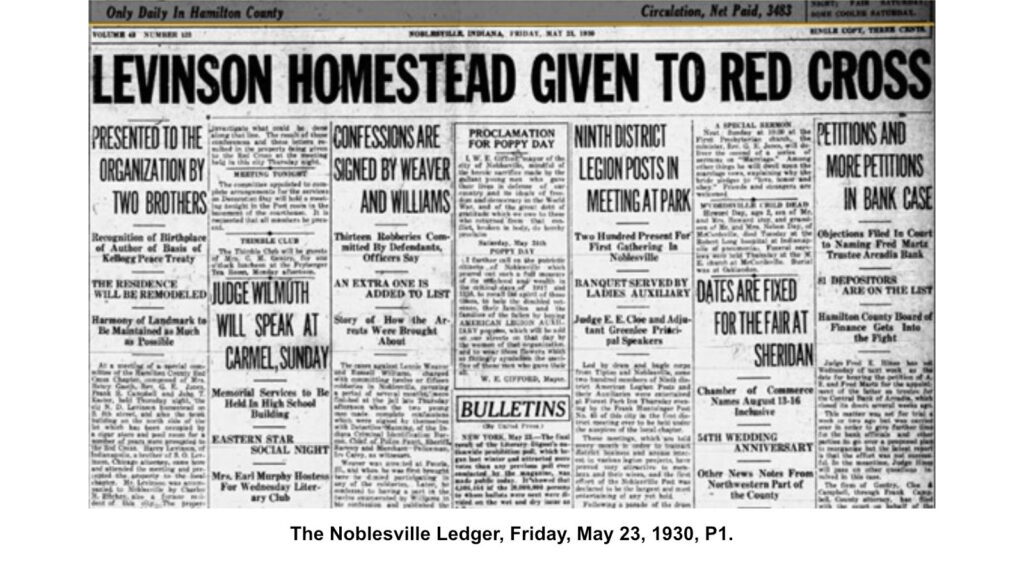
It was in 1930 that N.D. and Minnie Levinson’s sons, Sol Levinson and Harry Levinson, continued the family tradition of charity by donating the Levinson Homestead to the Red Cross to use as a headquarters. The Red Cross had planned to install a bronze plaque to recognize the Levinson family. However, before the Red Cross could move in, the house was condemned by the city Fire Marshal.

Despite local protests, the Levinson Homestead was demolished in 1932. While the details are lost to history, the Levinson’s impact on this site could not be denied. The land you see in front of you was officially gifted to the city of Noblesville by Uncle Sol Levinson in 1938. As worded in the Wednesday, February 23, 1938 Noblesville Ledger, “Now this property belongs to the city and perhaps some way may be arranged to commemorate the memory of this popular and helpful family of the early days of Noblesville”

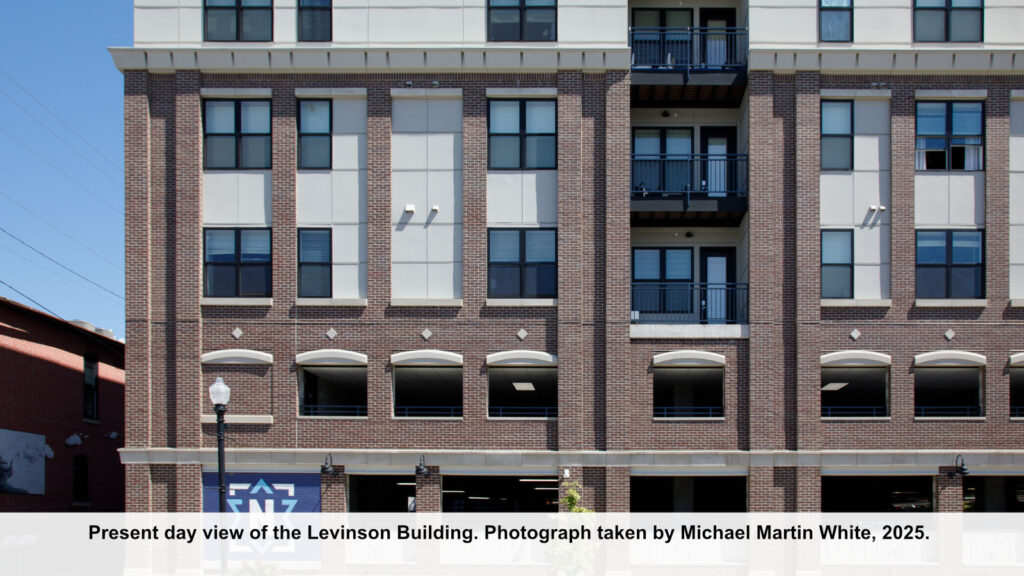
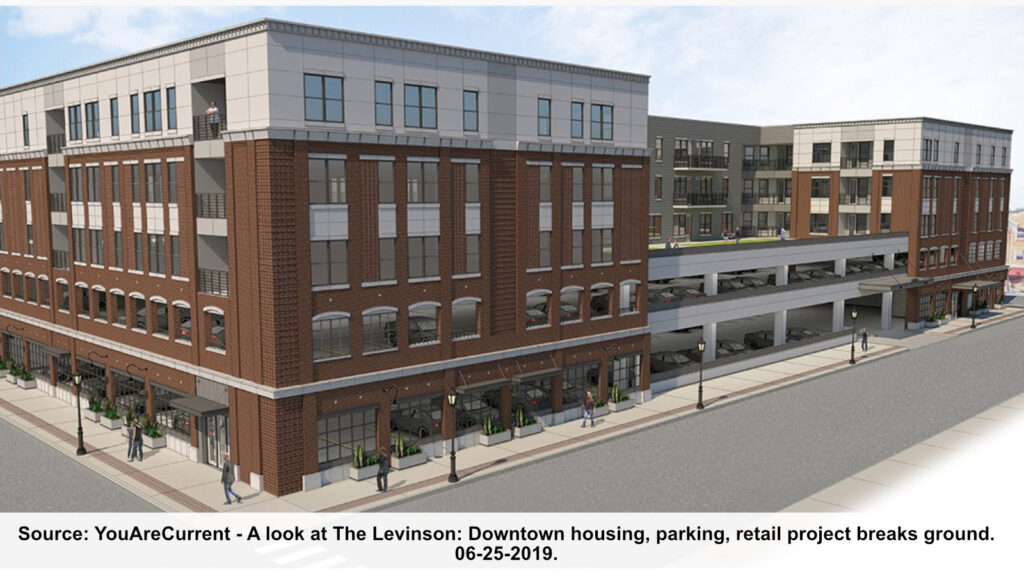
Coming full circle, in September 2018, when the City Council approved plans for this mixed-use development, they did, in fact, commemorate this family’s legacy by naming this building in their honor.

Nickel Plate Line Separator
Stop 4 Image

STOP 4
146-148 South 8th Street

album-art
00:00
Hide TranscriptShow Transcript

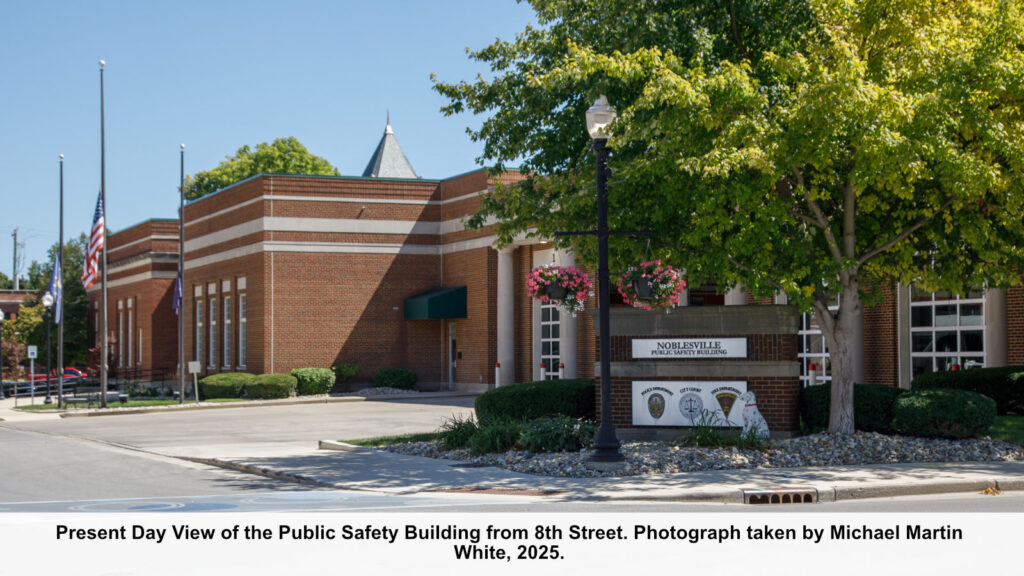
Stop 4 – Norman Norell’s Birthplace/Public Safety Building (146-148 S. 8th St.)

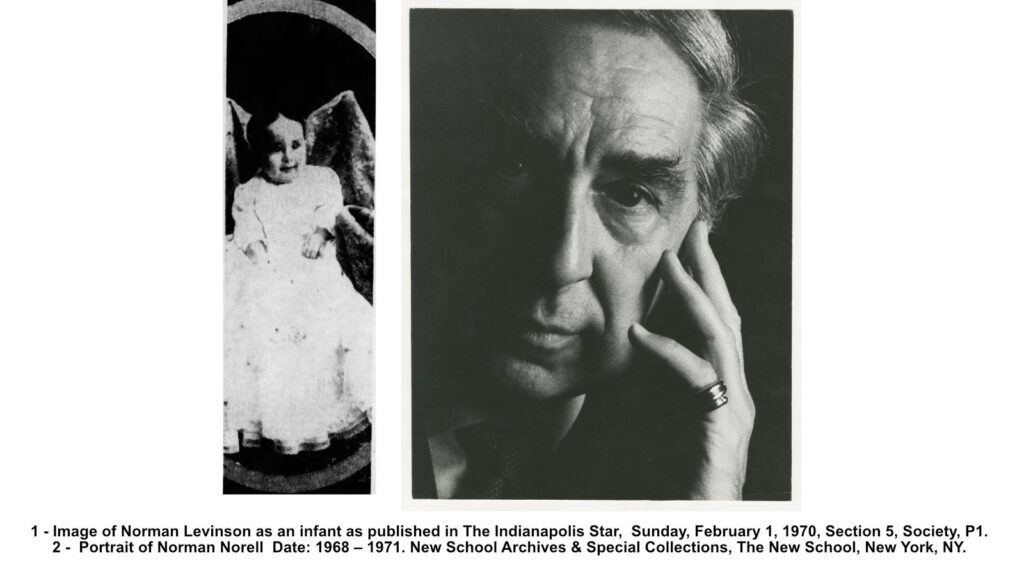
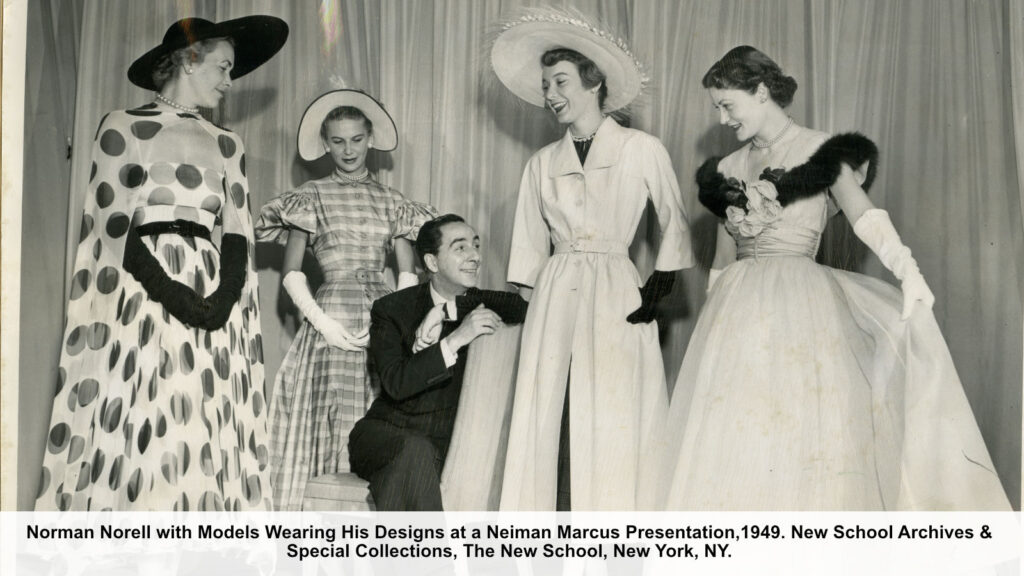
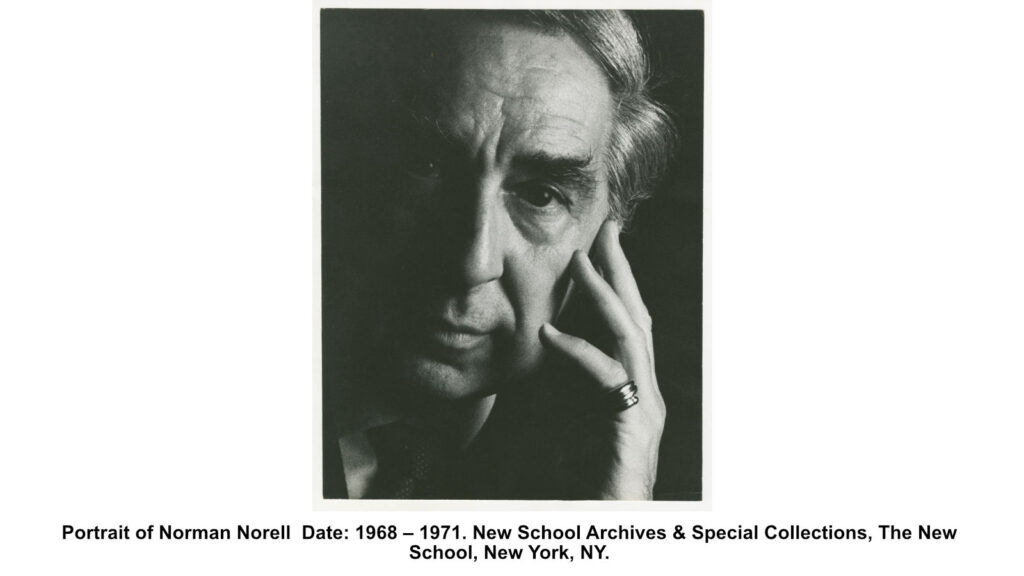
146-148 South Eighth Street, on the northwest corner of the Public Safety Building block, was the site of the birthplace of world-renowned fashion designer Norman Norell; born Norman David Levinson, right here in Noblesville at the turn of the century on April 20th, 1900.

Norman was the second son of Harry and Nettie Levinson, and although he never had the opportunity to meet them, was also a grandson to N.D. and Minnie Levinson. Norman traveled the world, designed clothes for famous people, and would become known as the “Dean of American Fashion,” but he spent his early childhood here in Noblesville.

Local historian David Heigway notes, “This was the site of Norell’s birthplace. The family was living in an older brick building while their new house was being finished.
The family was still living in the house in late 1903. The house was later made into a duplex and the number changed in 1922. The building had been demolished by 1933.”
Known primarily as an internationally-famous ready-to-wear fashion designer, Norman’s career actually began as a costume designer for the theater where his work put him in contact with many famous people and got him a start in the fashion industry.

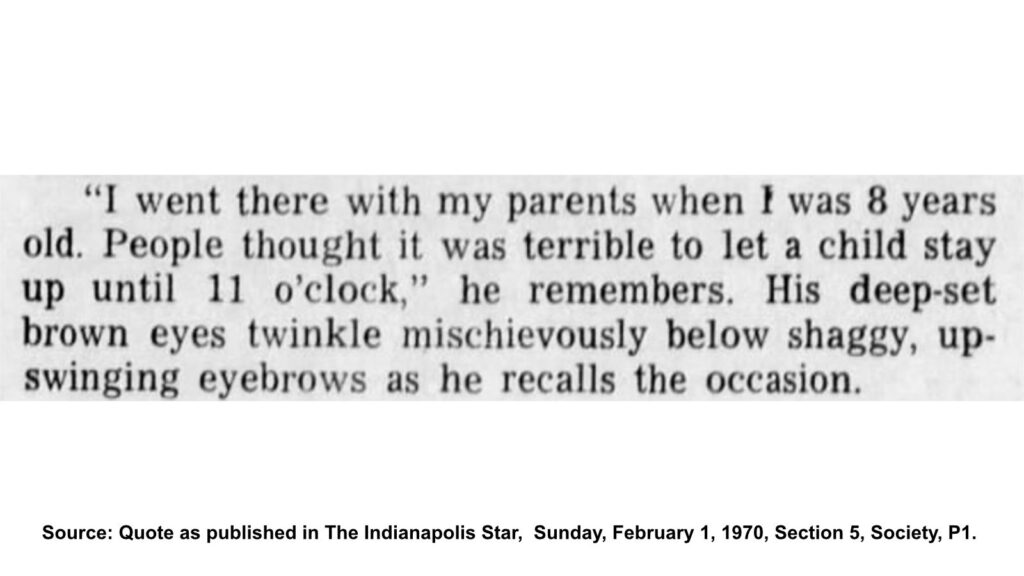
Norman’s early exposure to theater was due to the fact that his family’s clothing store in Indianapolis was just a few doors down from the Lyric and Ambassador theaters. His father Harry received free tickets for putting store advertisements in the theaters’ programs. Norman also attended shows at Keith’s Theater and the English Opera House in Indianapolis. He said in a later interview, “I went there with my parents when I was 8 years old. People thought it was terrible to let a child stay up until 11 o’clock.”
Many of Norman Norell’s early theatrical sketches have ended up back in Indiana as part of the Norell Collection at the Indianapolis Museum of Art.

In 1906 his family moved to Indianapolis to expand his father’s business. Still, Norman was precocious enough to remember those early years and later recognized his family’s significant roots in Noblesville.

As further example of Norman’s fondness for his hometown, he wrote the following in response to an October 1962 article by a fashion writer Agnes McCoy who referred to Noblesville as “a little-known place and said that it was a surprise that someone as sophisticated as Norell had come from there.”. When Agnes McCoy’s article was reprinted in the Noblesville Ledger, older brother Frank sent a copy to Norman in New York. Norman immediately wrote the following reply to the Noblesville Ledger, “I must say I resent Agnes McCoy saying Noblesville isn’t important! However, it may be my fault because when someone asks me where I was born, I always say, ‘a very small town, Noblesville, Indiana.’ I always see it the same size it was when I was born there in 1900. It is quite willful because my memories of Noblesville are very precious to me. I still see the courthouse square with horses and buggies tied up around – Caylor’s
Sowerwine’s, Lowther’s the corner drug store were all on the square (that was the town). Hare’s Buggy store and John Dold’s candy store were around the corner. Band concerts were held on Thursday night. The covered bridge was north of the square.

So many wonderful happy memories. This is the way I think of Noblesville. I know perfectly well it isn’t like this now. Maybe I do not like the passing of time. Whatever it is, my Noblesville is very important to me, whether Agnes McCoy thinks so or not.”

Norman Norell’s contributions are commemorated with an historical marker at our next stop close to 150 South 8th Street; right by the fire department.

Nickel Plate Line Separator
Stop 5 Image

STOP 5
150 South 8th Street

album-art
00:00
Hide TranscriptShow Transcript

STOP 5 – Norman Norell Historical Marker (150 S. 8th St.)

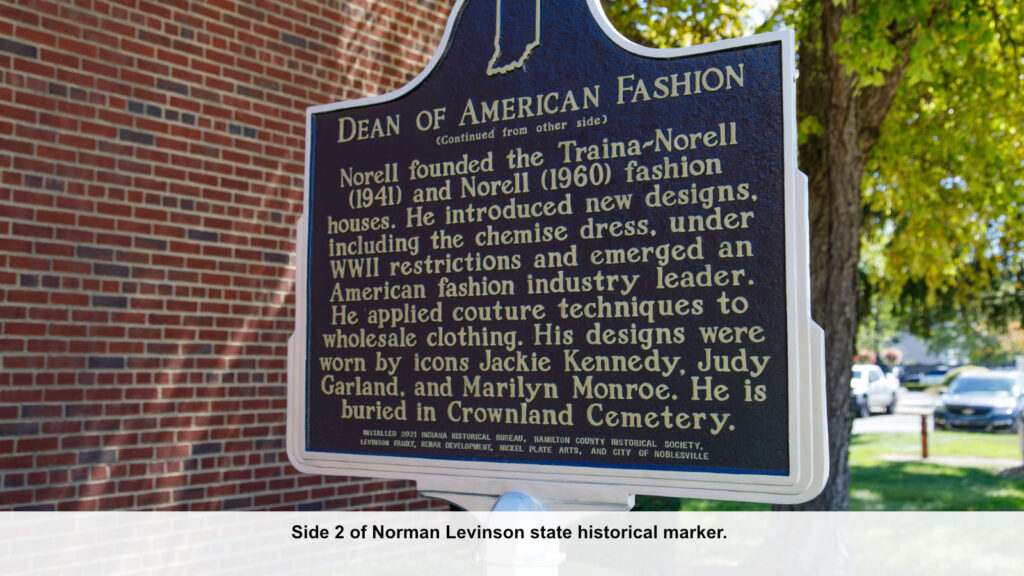
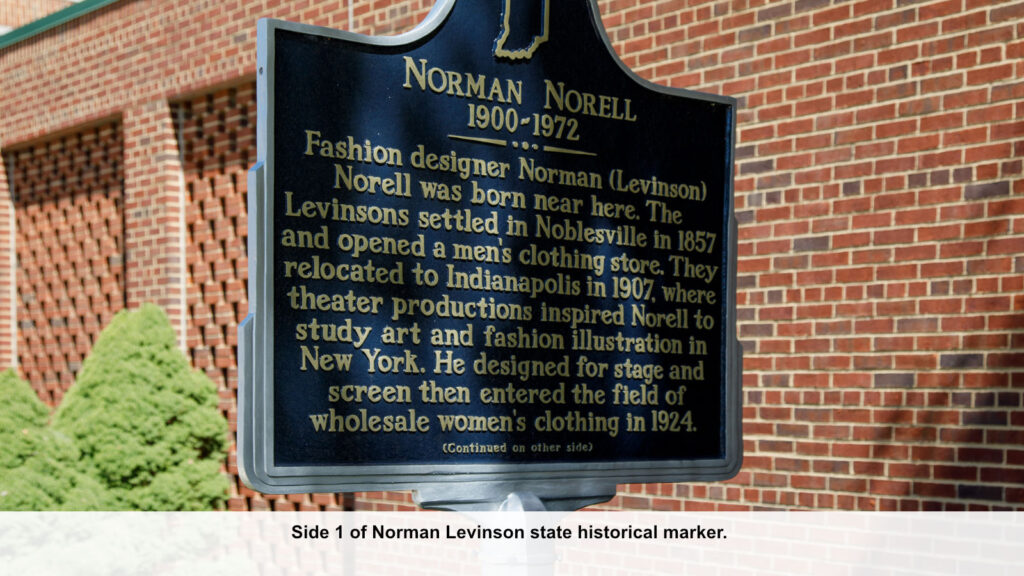
As we approach 150 South 8th Street, you will see a state historical marker commemorating Nobleville’s very own Norman David Levinson – also known as — Norman Norell – “Dean of American Fashion” for his influence and mentorship of younger designers. Dedicated in 2021, this is the FIRST historical marker in the state to spotlight a Hoosier’s contribution to the fashion industry. The major donor for this marker was the present-day Levinson family.

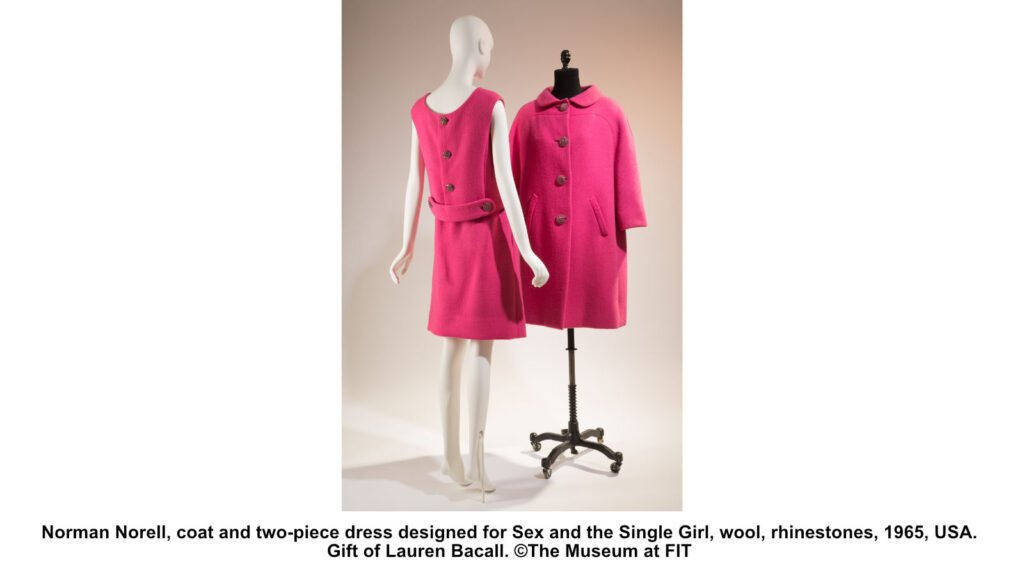
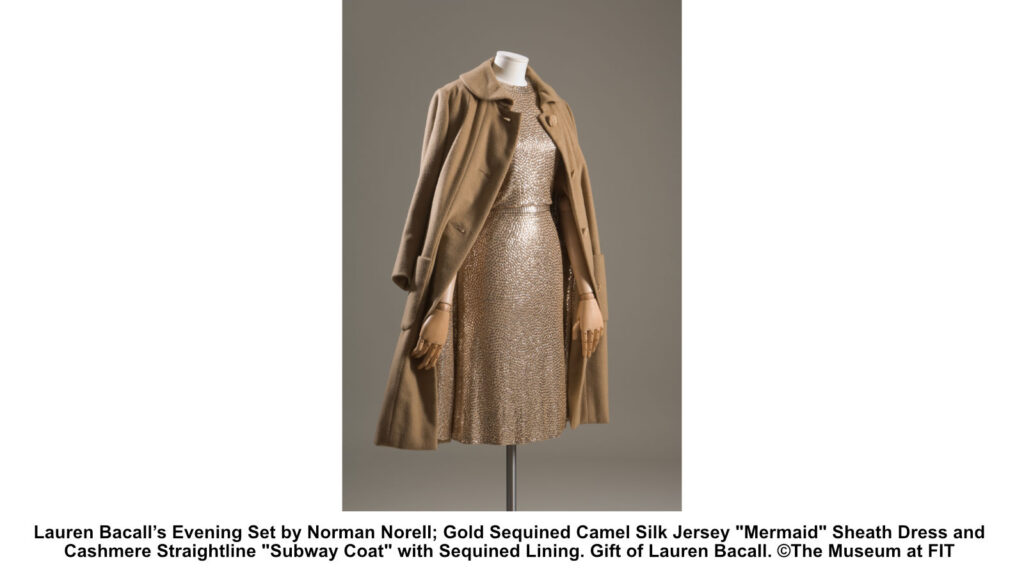
Norman Norell gained worldwide prestige and notoriety as one of the nation’s leading fashion designers during the post-World War II period. Norell’s career in the fashion industry spanned an incredible five decades, beginning in 1922, when he worked as a costume designer for Paramount Pictures in Astoria, Queens, until his death in 1972, when he was the sole owner of his own fashion house on New York City’s Seventh Avenue. Over the years, Norell’s clients included Hollywood film stars, such as Marilyn Monroe, and entertainers, as well as socialites and the wives of politicians and industrialists. His influence continues beyond his death: in 2010, first lady Michelle O’Bama wore one of his dresses during a Christmas film shoot.

Norell was the recipient of the first fashion industry critics’ Coty Award and from the early 1940s through the 1960s, his designs helped make New York’s fashion houses rival those in Paris.

It is time to find the location of the home that Norman Norell Levinson first remembered, 840 Cherry Street.

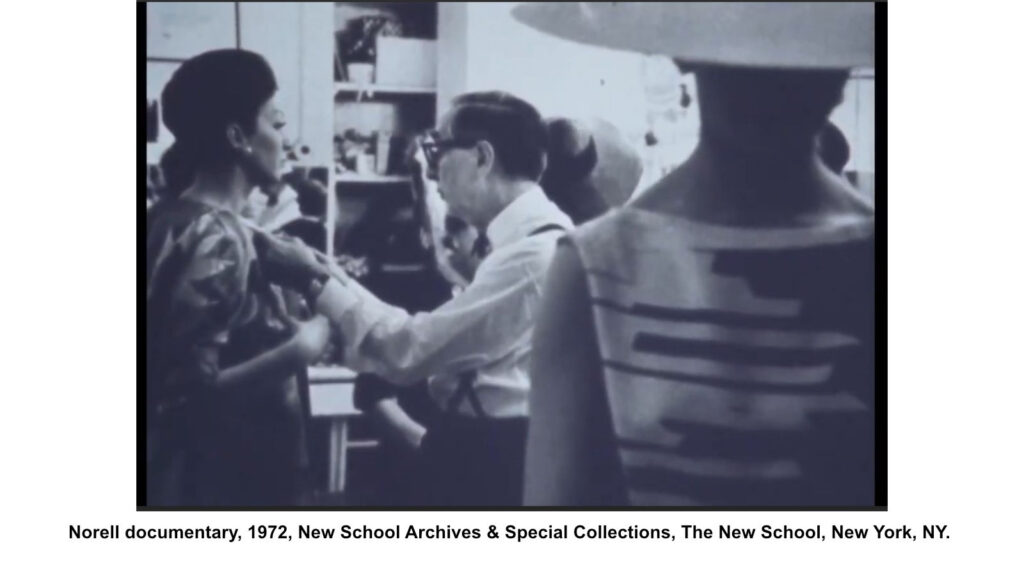
Norell Documentary, 1972

New School Archives & Special Collections, The New School, New York, NY.

Parsons School of Design Annual Fashion Show, 1970

New School Archives & Special Collections, The New School, New York, NY.

Nickel Plate Line Separator
Stop 6 Image

STOP 6
840 Cherry Street

album-art
00:00
Hide TranscriptShow Transcript

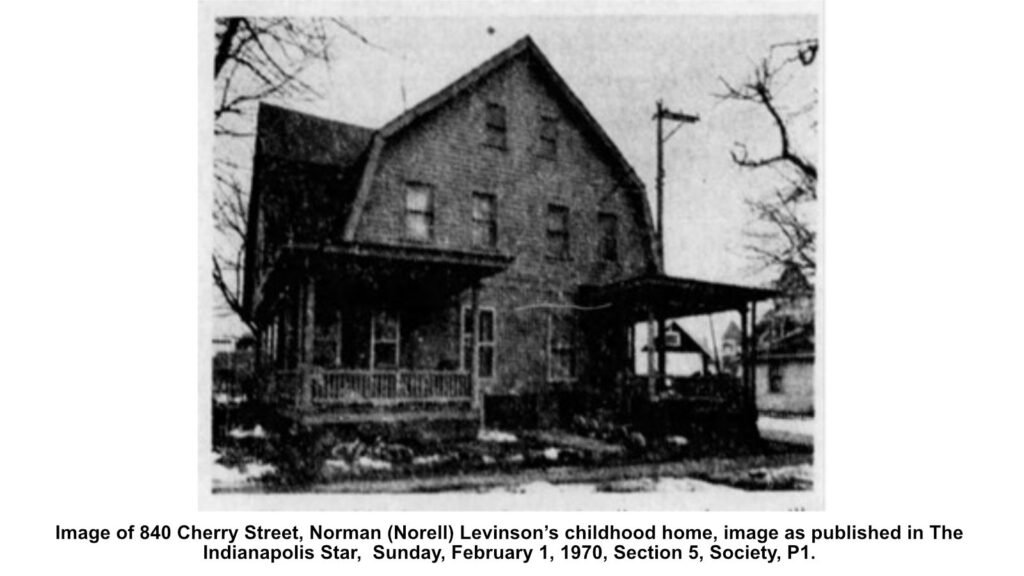
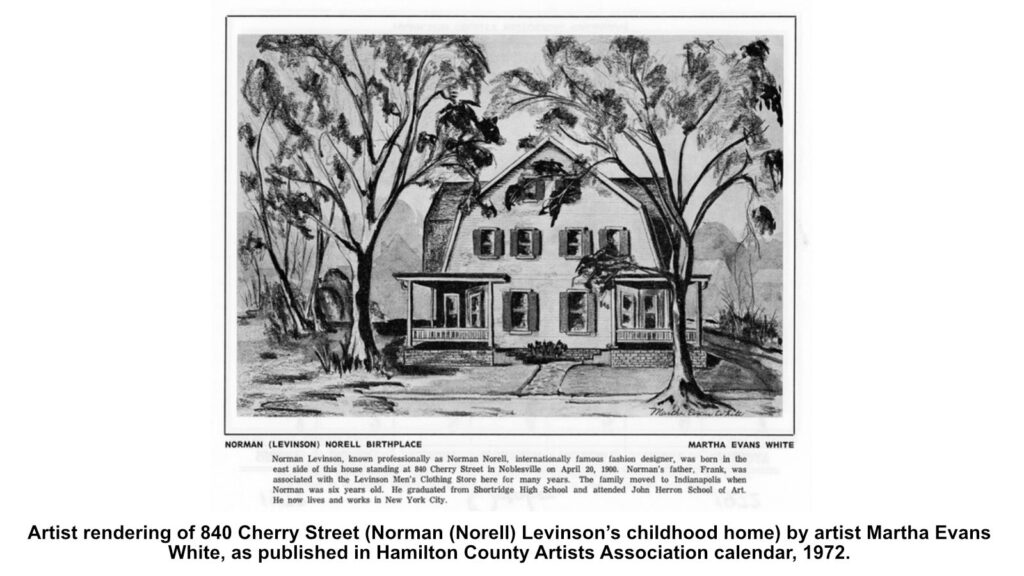
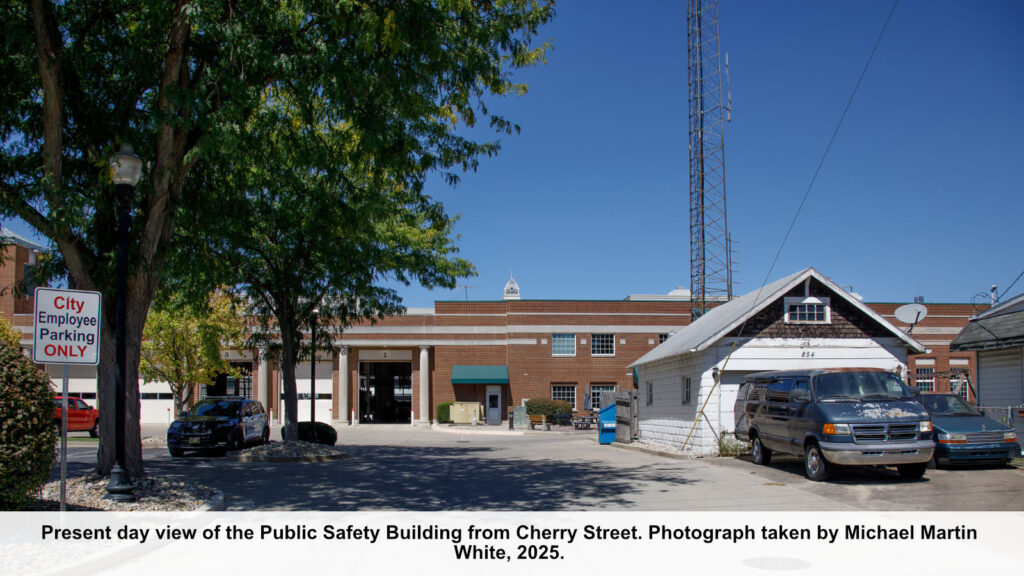
Stop 6 – Norman Norell’s Boyhood Home/Public Safety Building (840 Cherry St.)

Presently, you should be standing by the South driveway for the Public Safety Building at 840 Cherry Street. Interestingly, for some time this location was believed to be the birthplace of Norman Norell Levinson. Norman is listed at 56 South Eighth Street as being one month old and not yet named in the 1900 census. However, Frank Levinson, Norman’s older brother, remembered Norman being born in the house at 146-148 South Eight Street.

Although their home was demolished in the early 1990’s there had been a charming duplex built by John C. Stephenson at this location. Historical records show that construction on the home was started in 1899 and half of the duplex was leased to Norman Norell Levinson’s father, Harry Levinson that same year.

This is where Norman Norell spent his early years of life while his father continued to operate the Levinson men’s clothing store in Noblesville. In 1907, Harry decided to expand the business and moved his family to Indianapolis. Clothing, tailoring, and fashion was obviously an influence for Norman, but his older brother Frank was the one who carried on the Harry Levinson clothing business after their father passed away in 1930.

Harry and Uncle Sol donated money for our next location at 295 South Ninth Street.

Nickel Plate Line Separator
Stop 7 Image

STOP 7
295 South 9th Street

album-art
00:00
Hide TranscriptShow Transcript

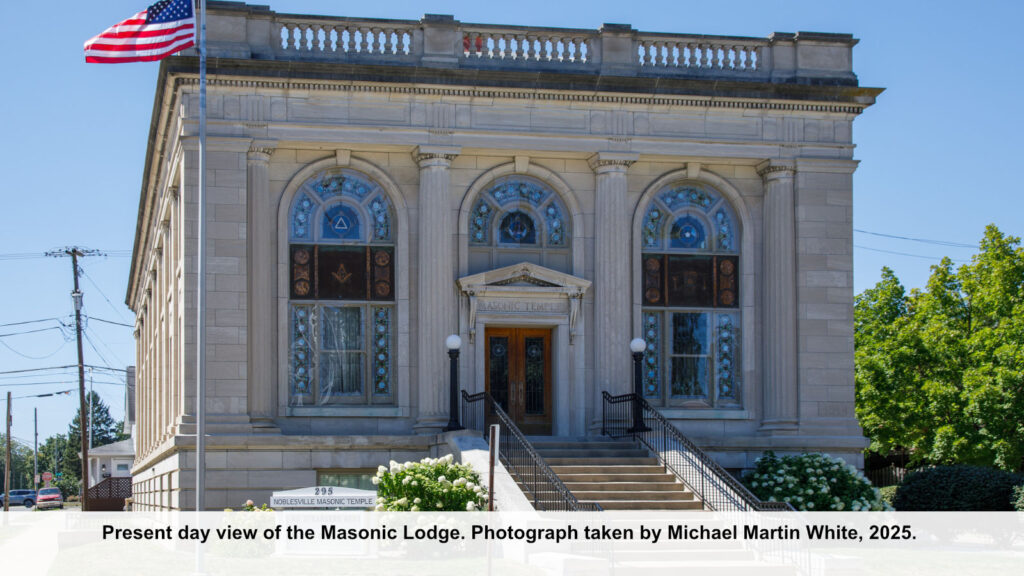
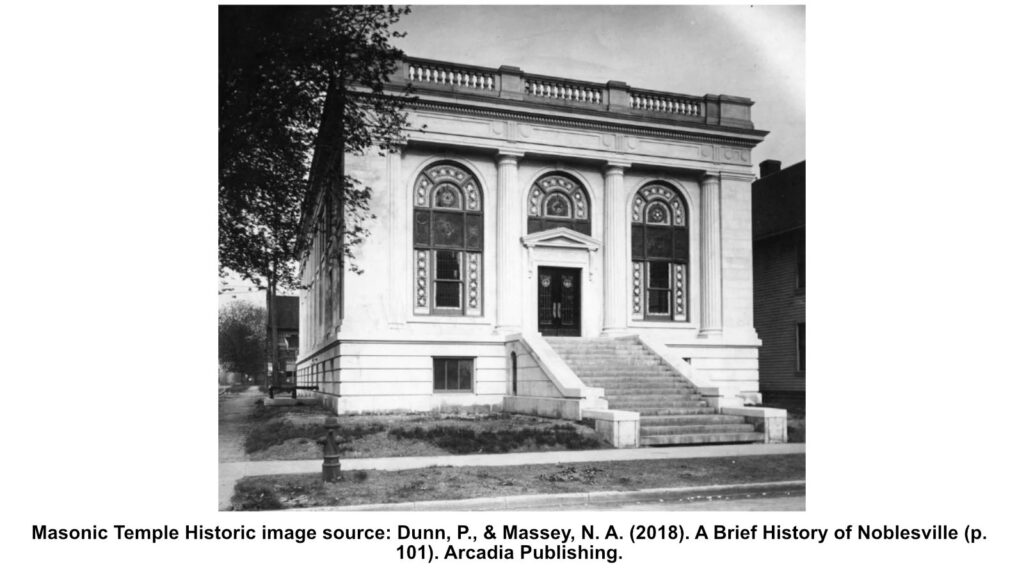
Stop 7 – Masonic Temple (295 S. 9th St.)

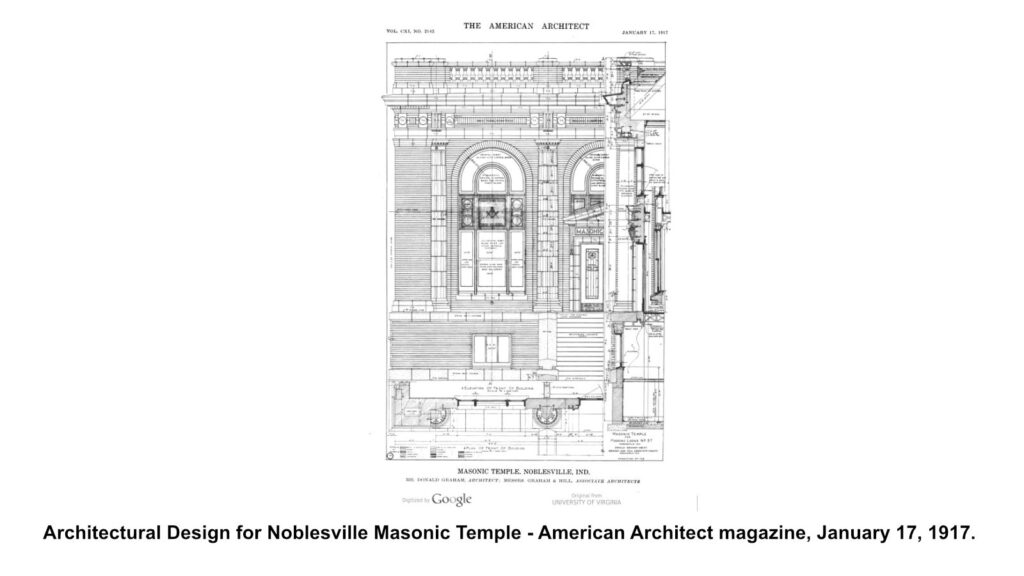
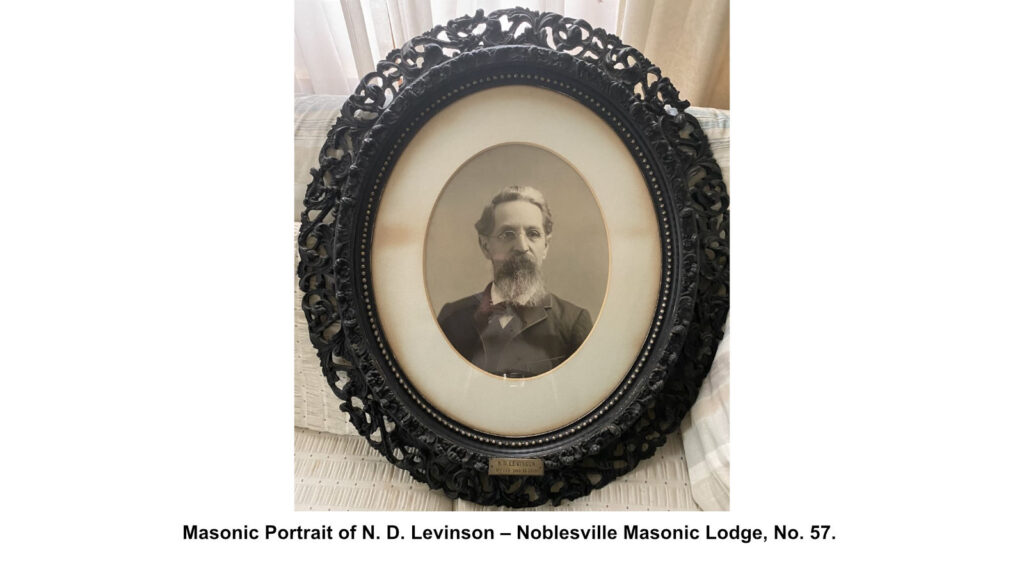
The 1914 Masonic Temple at 295 South Ninth Street was designed by Noblesville-born architect Donald Graham. This building served as an important backdrop to the social life of the Levinson family and their influence in Noblesville and Central Indiana. Sol and Harry continued the civic mindfulness set forth by their parents by contributing substantial funds for the Masonic temple in 1915 as their father had been a member of the group for many years. Minnie donated a large framed photograph of N.D. to the lodge in December of 1899.

Of note: Norman attended a dance here in 1916 as a special guest and Harry Levinson’s funeral was held here in 1930.

It’s time to head to the Levinson High School at 1448 Conner Street. Be prepared – this is a longer walk than the past few stops have been, but you’ll get to enjoy more of Noblesville on the way!

Nickel Plate Line Separator
Stop 8 Image

STOP 8
1448 Conner Street

album-art
00:00
Hide TranscriptShow Transcript

Stop 8 – Levinson High School & Gymnasium (1448 Conner St.)

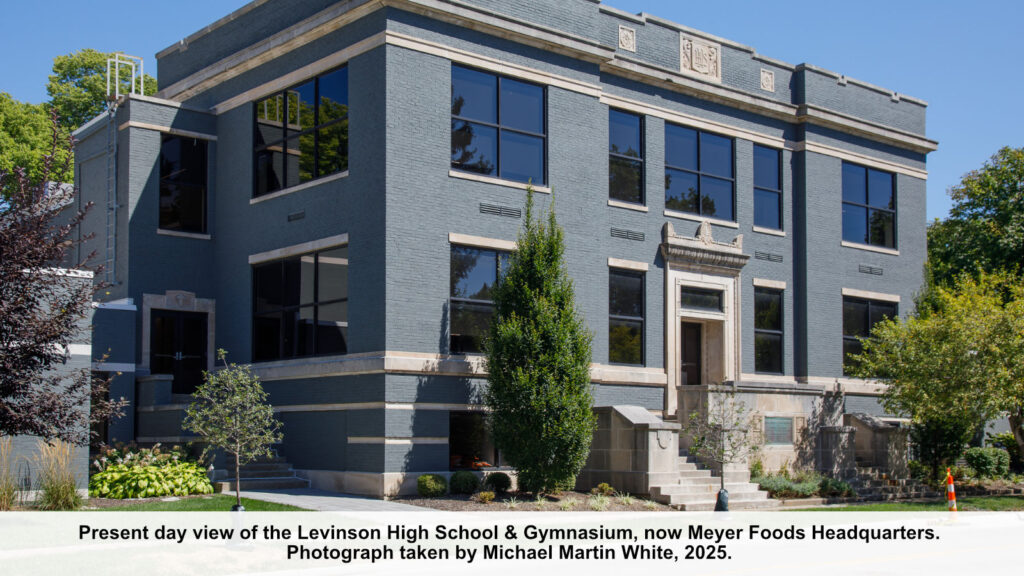
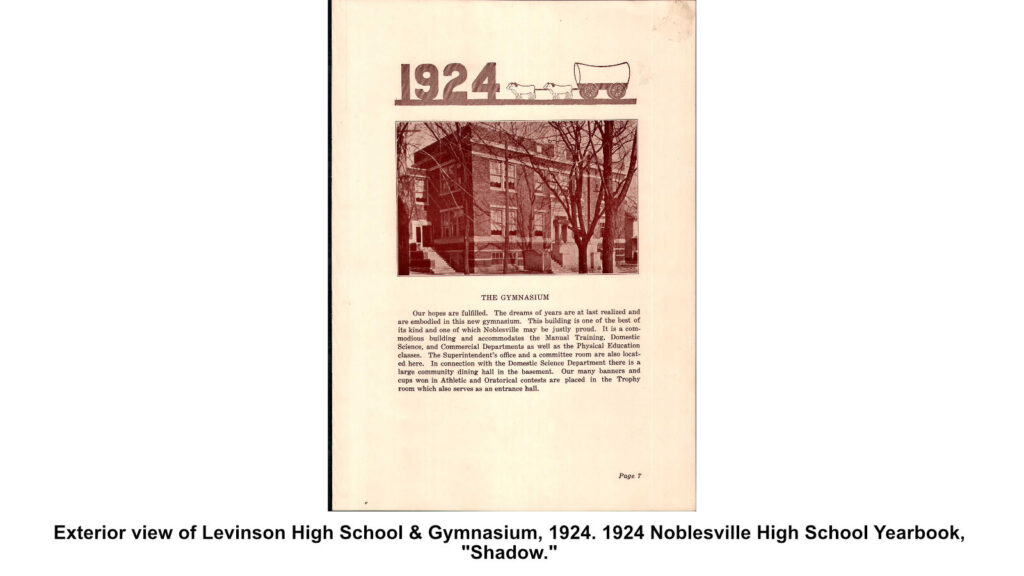
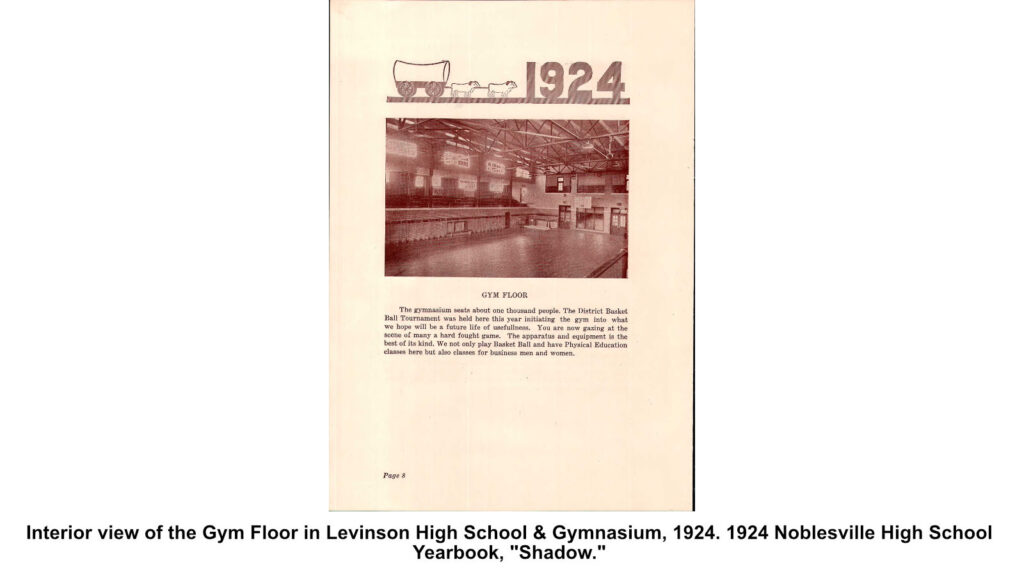
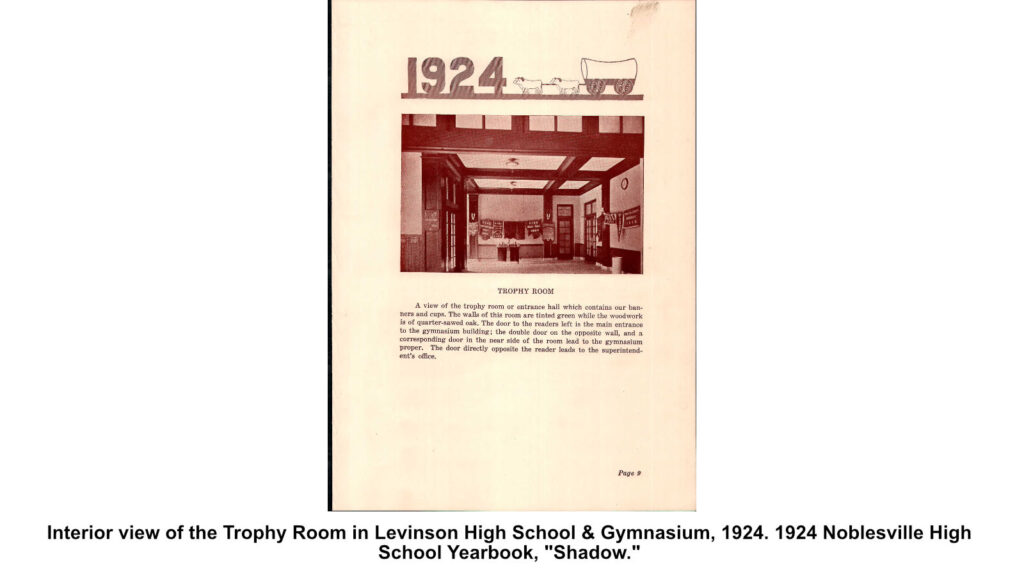
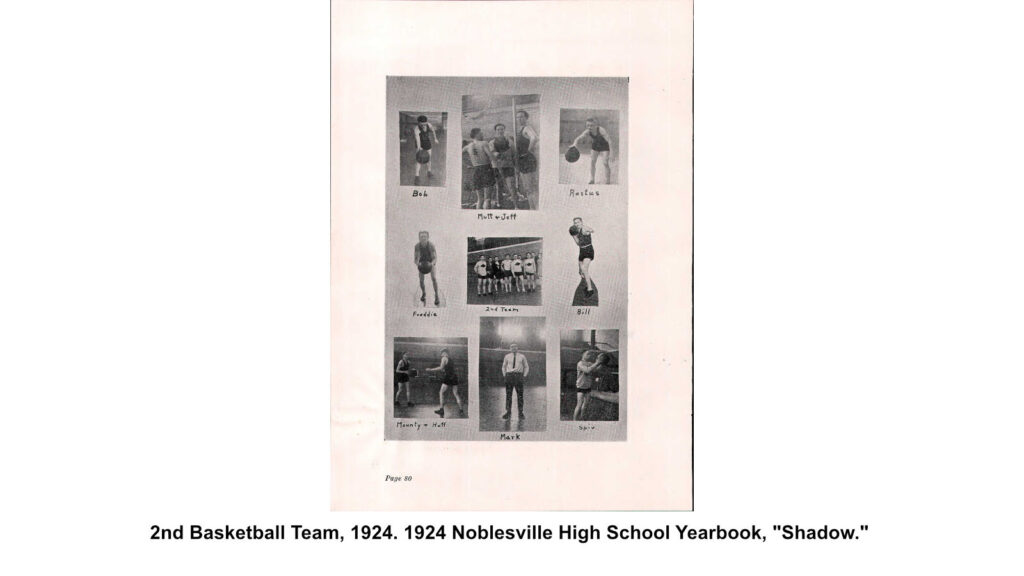
1448 Conner Street is the site of the former “Levinson High School and gymnasium”.
Norman Norell’s uncle, Sol, further continued the family’s philanthropy by establishing a scholarship prize of a $50 gold piece to Noblesville High School called the “Levinson Award.” This prize was first given out in 1906 and continues to be awarded today as the Empowering Youth Through Philanthropy: The Levinson Family Lifetime Philanthropy Award at Noblesville High School.

Sol’s great-grandson, Frank Levinson, started the award’s current iteration, preserving his ancestor’s unique practice of allowing Noblesville high schoolers to experience philanthropic giving for themselves. Frank says he hopes the gift not only teaches students about the discipline needed for long-term investment, but also provides them with a chance, “to see how community engagement over long periods of time can drive change, enrichment and even unexpected blessings.”

Student-recipients of the 2023 Levinson Award focused on three main impact-areas:

  • Mental health
  • Food security, and
  • Support for human service agencies

These three categories have been important throughout Noblesville’s history and continue to be important today.

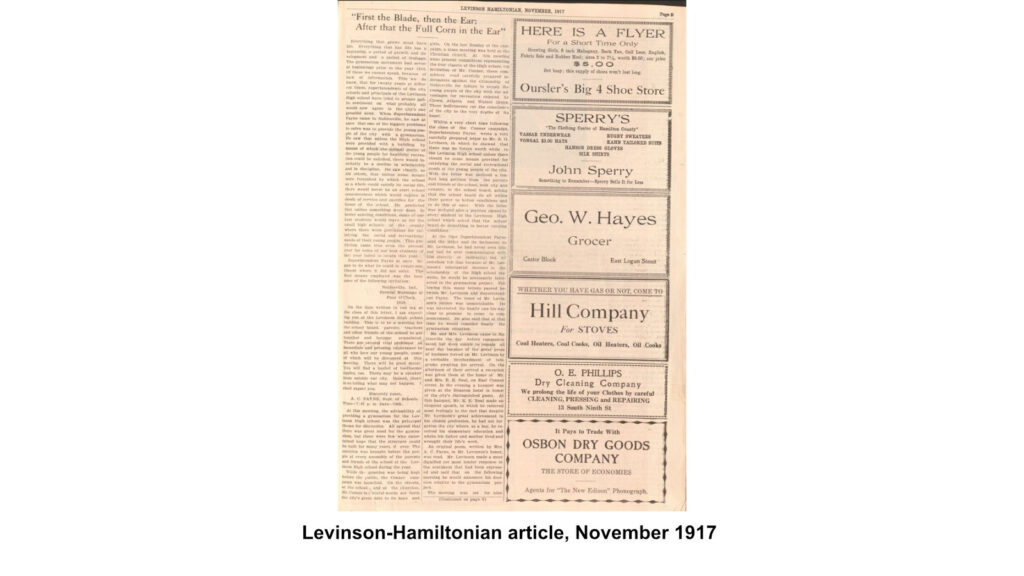
N.D. and Minnie were honored by the Noblesville School board in 1916 with the official renaming of the high school to the Levinson High School. This name was used for over 30 years, until sometime in the 1940’s.

Harry and Sol were both sports fans. Sol gave $10,000 to build the high school a new gymnasium in 1923. Even the school newspaper was called the “Levin-Sun.”

The building was used as the high school for 54 years, and then as a junior high school until 1968. The school portion was demolished in 1969 but the school gymnasium gifted by Sol Levinson remains standing today.

The next point of interest in the Levinson story is a bit of a walk from here. You can either proceed to Crownland Cemetery at 1776 Monument Street to view the Levinson Family Mausoleum, or you can listen to the information about the cemetery while you make your way to stop 10 at 98 North 9th.

Nickel Plate Line Separator
Stop 9 Image

STOP 9
1776 Monument Street

album-art
00:00
Hide TranscriptShow Transcript

Stop 9 – Levinson Mausoleum at Crownland Cemetery (1776 Monument St.)

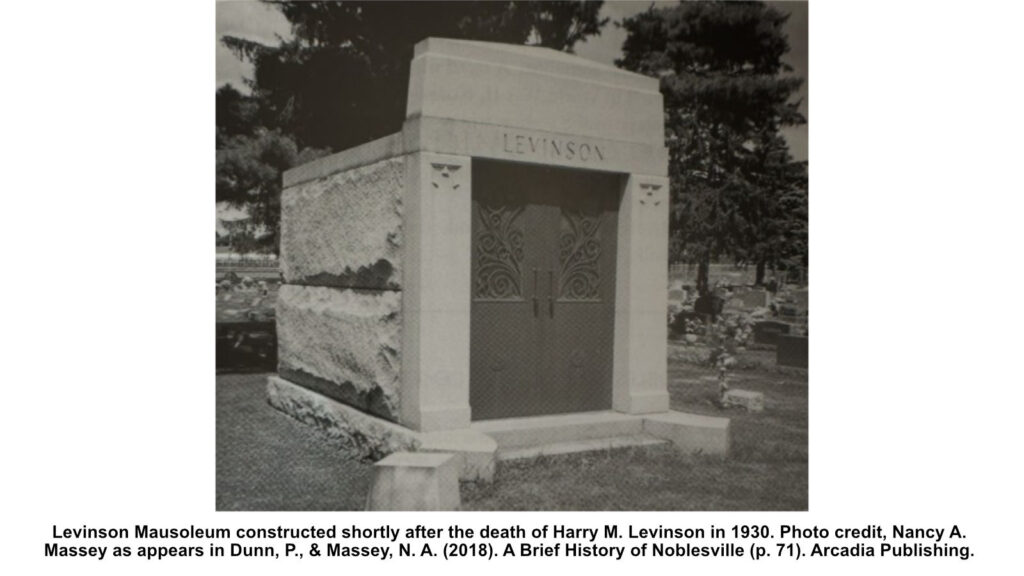
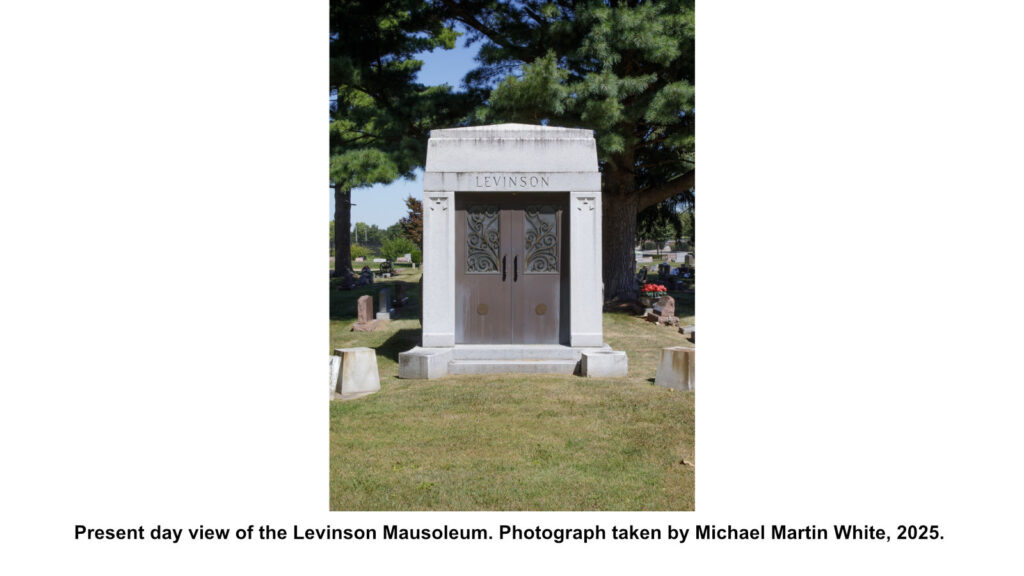
The Levinson family mausoleum at Crownland Cemetery is located in the Northeast area on Plot Section 14, Lot 11, Crypt 3. Originally built after Harry Levinson’s passing in 1930, the Levinson family mausoleum is where fashion designer Norman Norell, his father Harry Levinson, and his mother Nettie Kinsey Levinson were interred.

Crownland Cemetery was established in 1867 at the highest point in Noblesville mainly due to flooding issues at the older Riverside Cemetery located on the banks of the White River. In fact, in early Noblesville obituaries and interment lists, Crownland was referred to as “New Cemetery” with “Old Cemetery” referring to Riverside. Crownland Cemetery was part of the 19th century “garden cemetery” movement and was landscaped to be aesthetically pleasing and create a soothing atmosphere. The older sections contain many other distinctively designed memorials in addition to the Levinson family mausoleum.

An old Mason Lodge and the first theater building in Hamilton County are up at our next stop at 98 North Ninth Street.

Nickel Plate Line Separator
Stop 10 Image

STOP 10
98 North 9th Street

album-art
00:00
Hide TranscriptShow Transcript

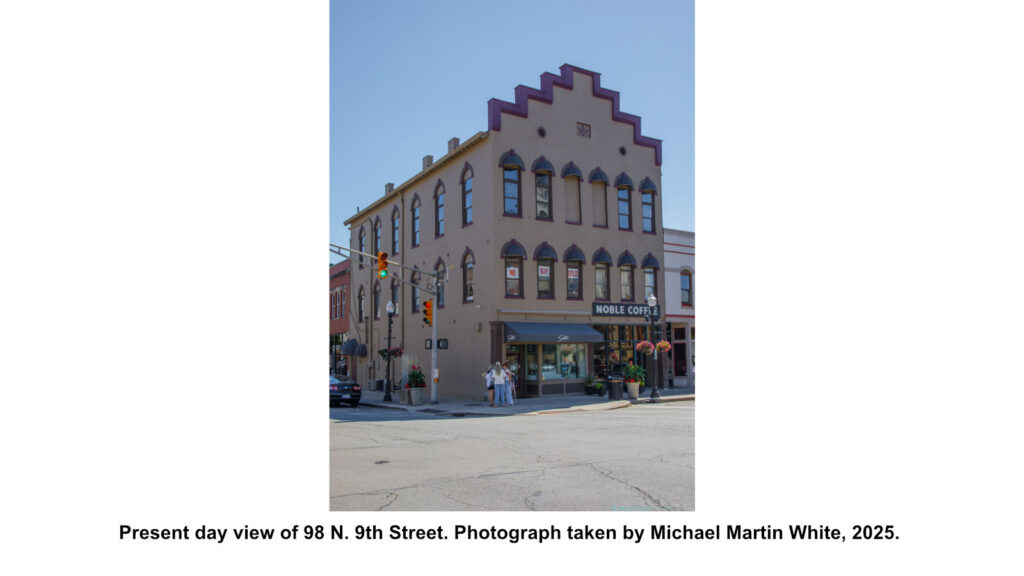
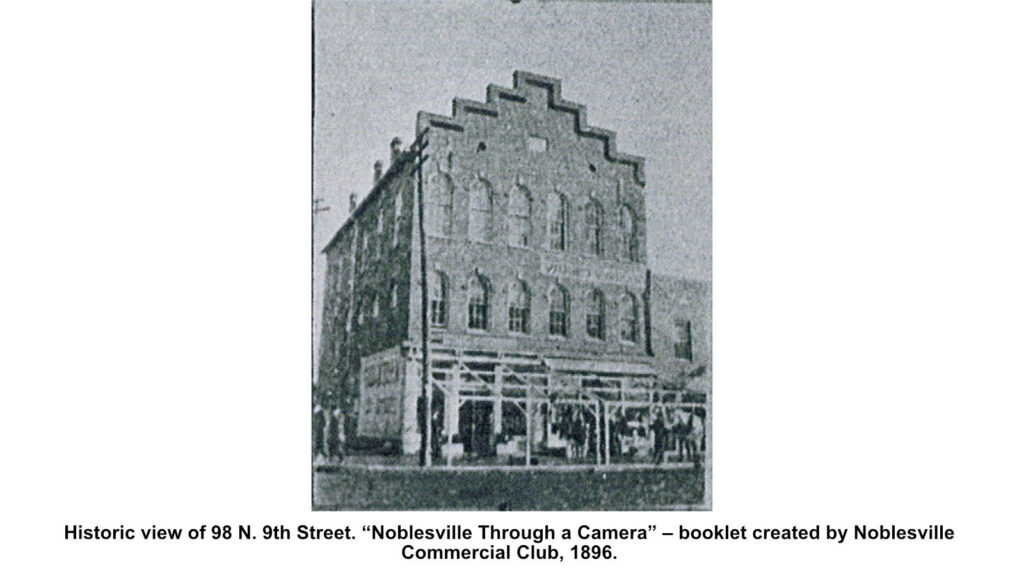
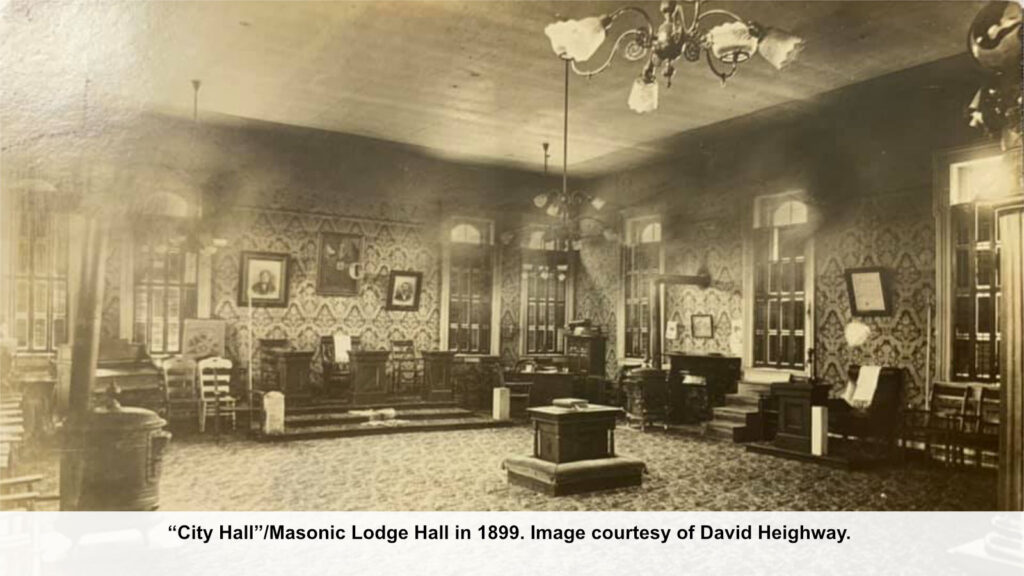
Stop 10 – “City Hall”/Masonic Lodge Hall (98 N. 9th St.)

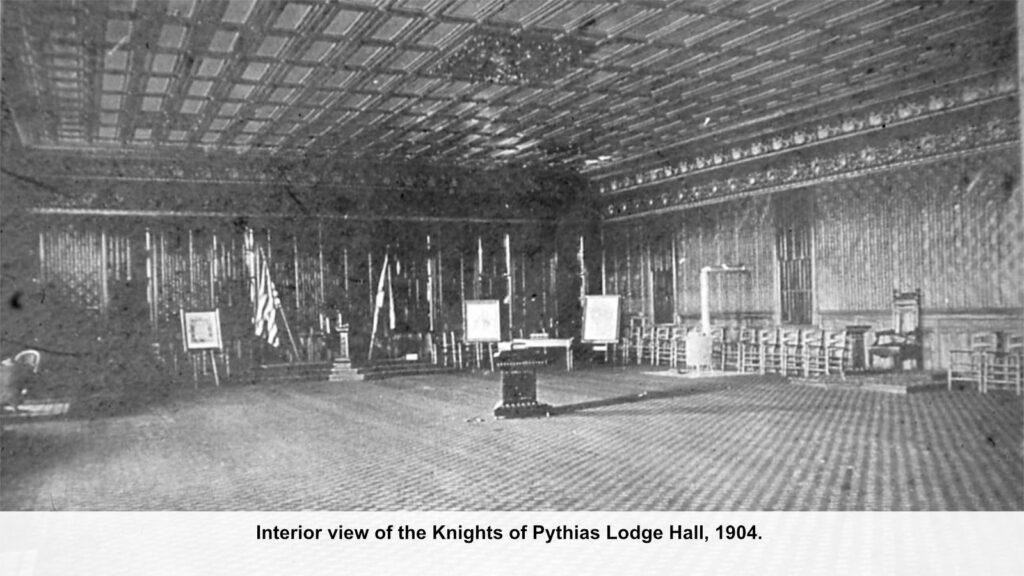
This building at 98 North Ninth Street was constructed in 1869 as the first theater in Hamilton County, with the auditorium on the third floor. At the time, the building was called “City Hall” and was used as both the town’s social gathering space and theater space until Leonard Wild built his first opera house in Noblesville in the 1880’s. N. D. Levinson was a member of both the Masons and the Odd Fellows when the lodge hall was in the City Hall building.

The Masons bought the space in 1884 and converted it into their new lodge hall. They remodeled the front of the building to include the Masonic symbol and added the stepped design seen today.

The inspiration of a big red straw hat is up next at 871 Conner Street.

Nickel Plate Line Separator
Stop 11 Image

STOP 11
871 Conner Street

album-art
00:00
Hide TranscriptShow Transcript

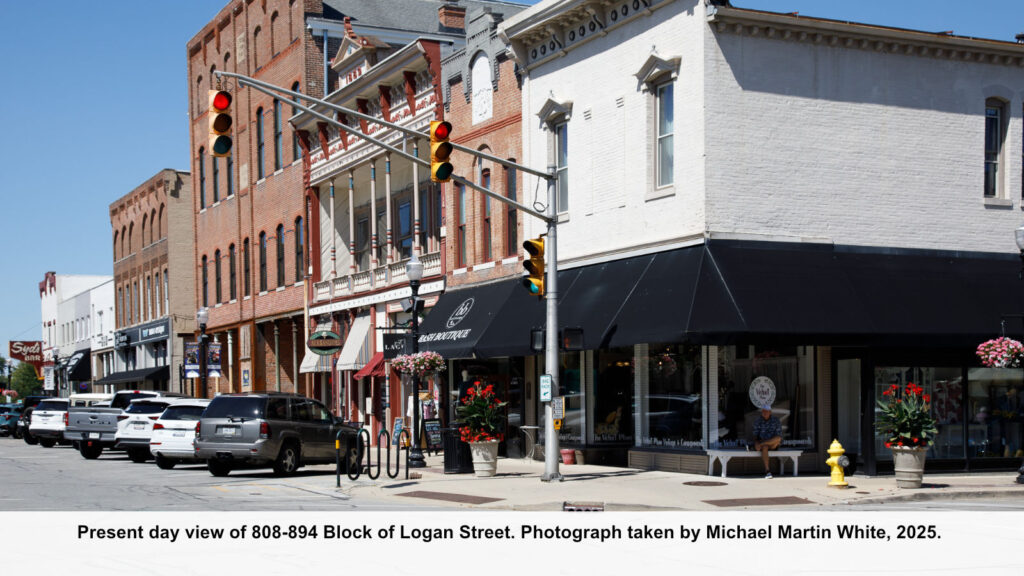
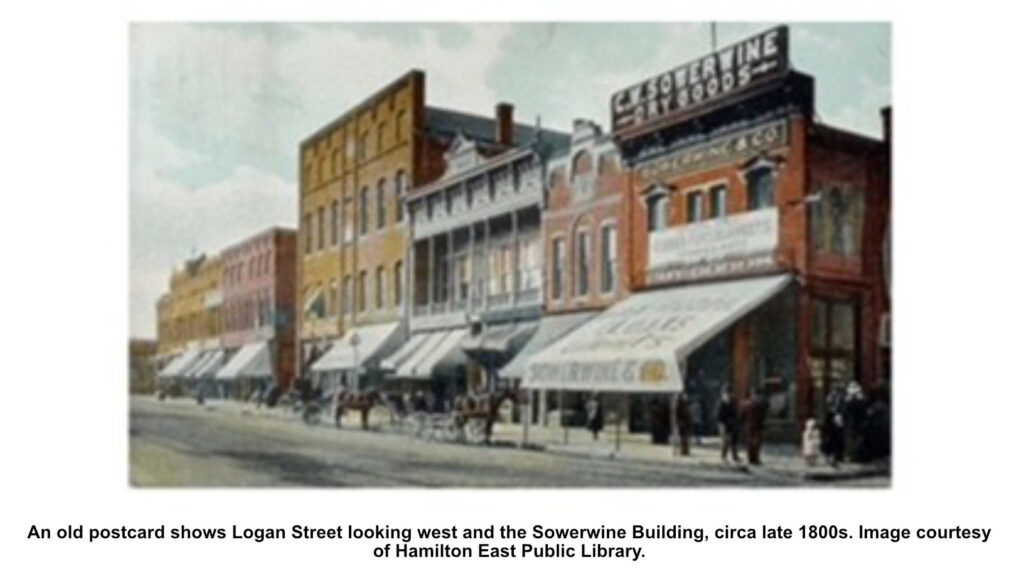
Stop 11 – C. W. Sowerwine Dry Goods/The Velvet Plum (894 Logan Street.)

You may remember Norman Norell mentioning our next location in an early quote about his love for Noblesville. The C. W. Sowerwine Dry Goods store was a cornerstone for many years in downtown Noblesville. Charles Sowerwine had his dry goods business on the south side of the square (871 Conner Street) from 1901 to June of 1904 until he moved to the north side – where we are now. The building itself is one of the oldest on this side of the square.

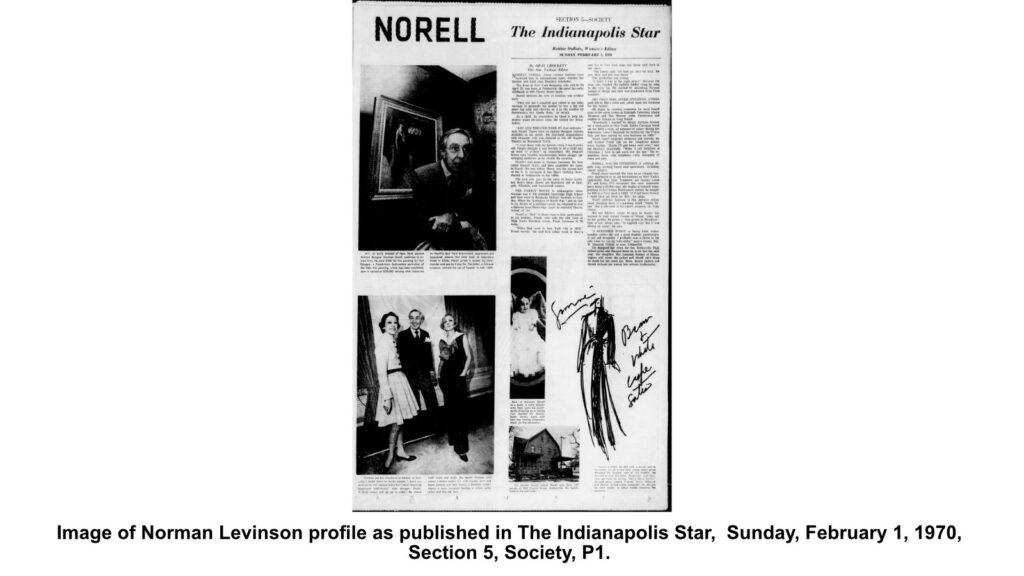
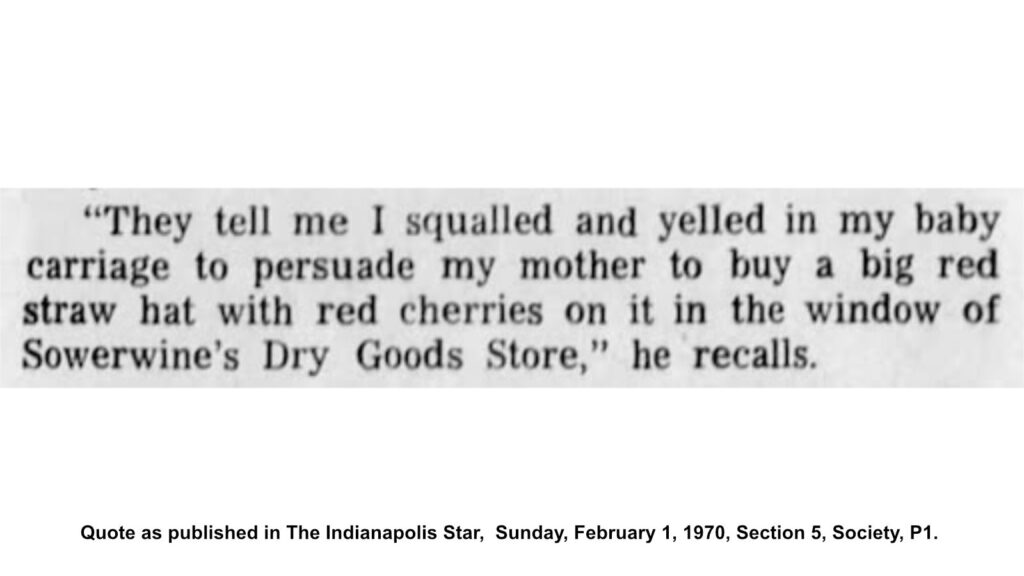
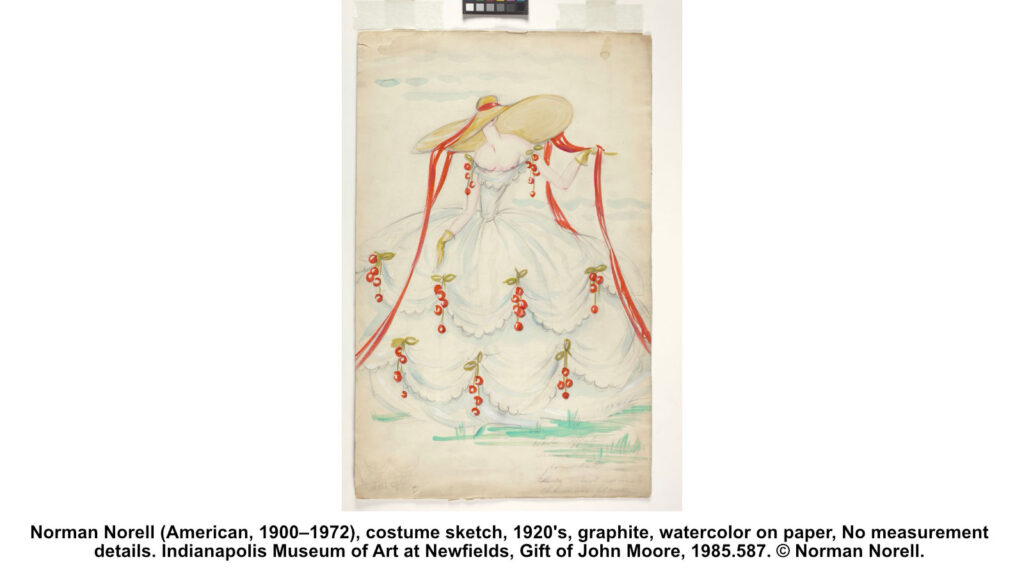
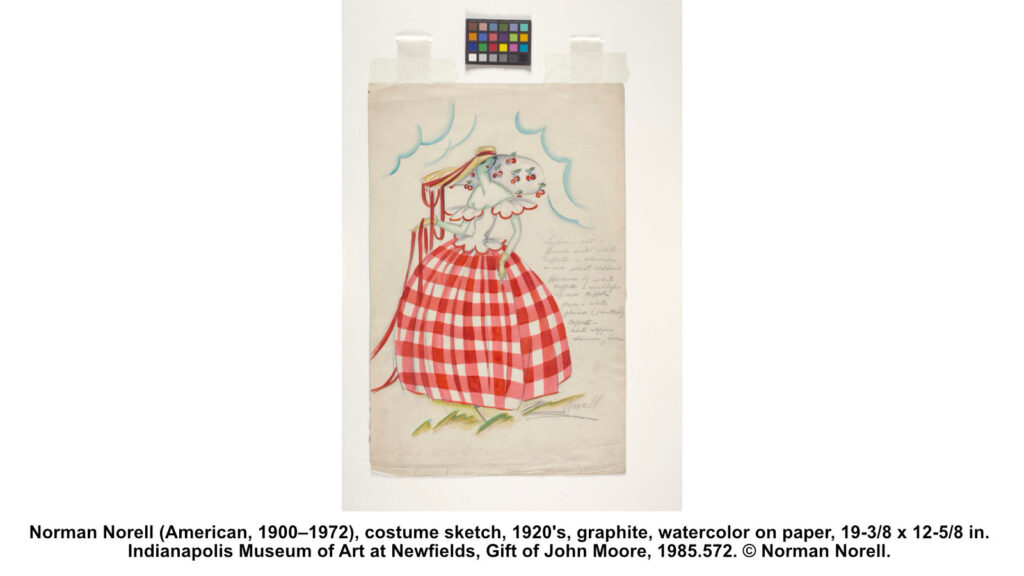
In thinking back about this store, Norman Norell recalled in a conversation with Indianapolis Star Fashion editor, Opal Crockett, published Sunday, February 1, 1970, “They tell me I squalled and yelled in my baby carriage to persuade my mother to buy a big red straw hat with red cherries on it in the window of Sowerwine’s Dry Goods Store.”

Normal Norell’s designer sketches can be found in Newfields Indianapolis Arts Museum’s archives. If you take a look at the images on the website, you can imagine how “the straw hat with red cherries on it” within this store window may have left a big impression on the young Norman.

At our next stop at 848 Logan Street, you’ll learn how Grandma Minnie Levinson’s charity knew no end.

Nickel Plate Line Separator
Stop 12 Image

STOP 12
848-856 Logan Street

album-art
00:00
Hide TranscriptShow Transcript

Stop 12 – The Ladies Aid Society Reading Room/Lacy Block (848-856 Logan St.)

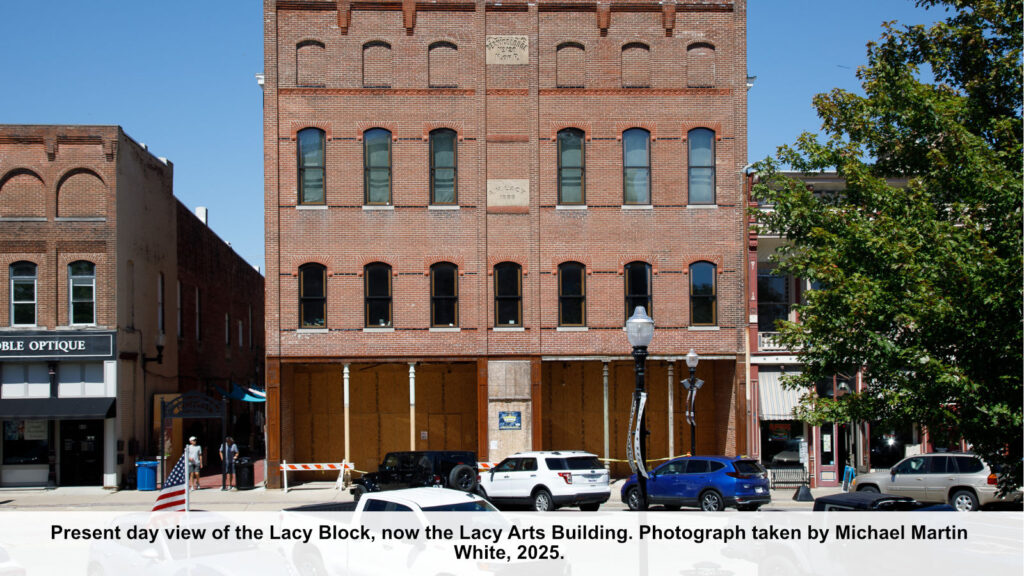
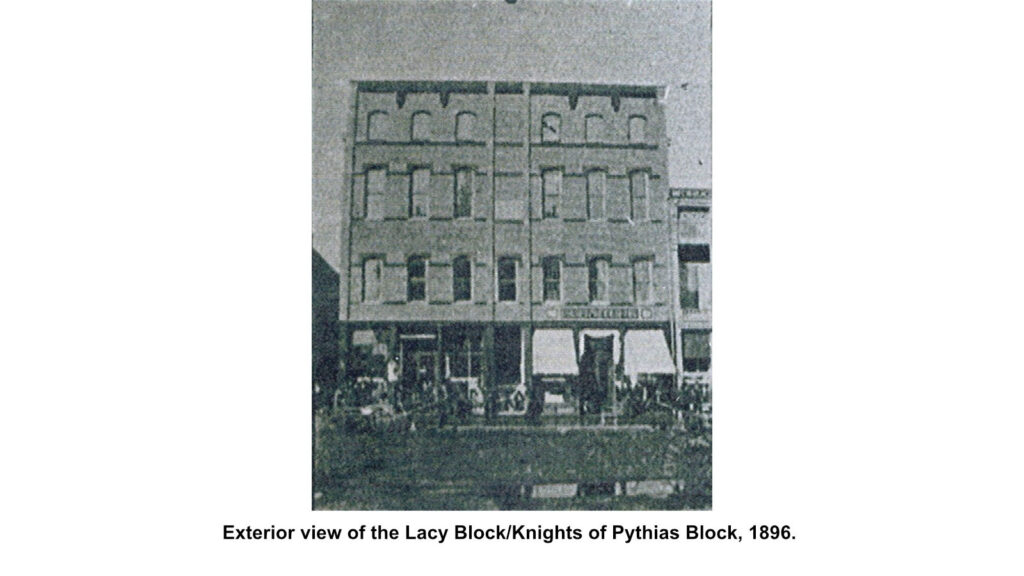
The building at 848-856 Logan Street is known as The Lacy Block and was constructed in 1888. The Ladies Aid Society reading room was established on the second floor by then president of the organization, Minnie Levinson. This reading room, a small library specific for women, was open between 1890 and 1897. Minnie’s son, Sol Levinson, began giving an annual award to the Ladies’ Aid Society in memory of his mother.

Within John Stoner’s book, Sol Levinson and the Pact of Paris: a Study in the Techniques of Influence, Minnie was described as follows, “While the father (N.D) was respected, the mother was loved. She was an ‘indefatigable worker among the poor,’ always caring for the needy, lending a hand to the down-and-out, ‘feeding the hungry, and clothing the naked.’”

Regarding the feelings many in the town had toward Minnie, the reporter had noted, “if the testimony of a hard-looking former bartender could be taken as evidence …When I asked some questions which he interpreted as a little too prying, he very freely offered to knock the ‘damned block off’ my shoulders if I said anything disrespectful of her. This affectionate devotion to her memory was also echoed in forms appropriate to his station in life by every person I could find in Noblesville, from the circuit judge to a clerk in what had been a competing store. One ‘rugged individualist,’ when discussing her activity as permanent head of the Ladies’ Aid Society until her death in 1901, suggested that she might have been a bit impractical, for ‘there have been and always will be a lot of professional deadbeats who ought to starve that put it over on her,’ but he added hurriedly; ‘no better woman ever lived than Minnie Levinson.’”

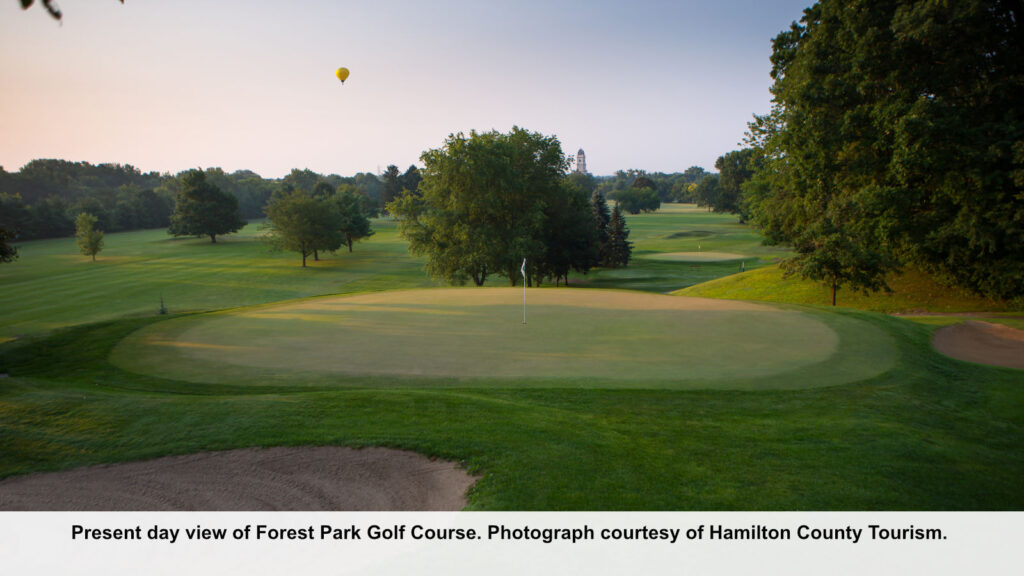
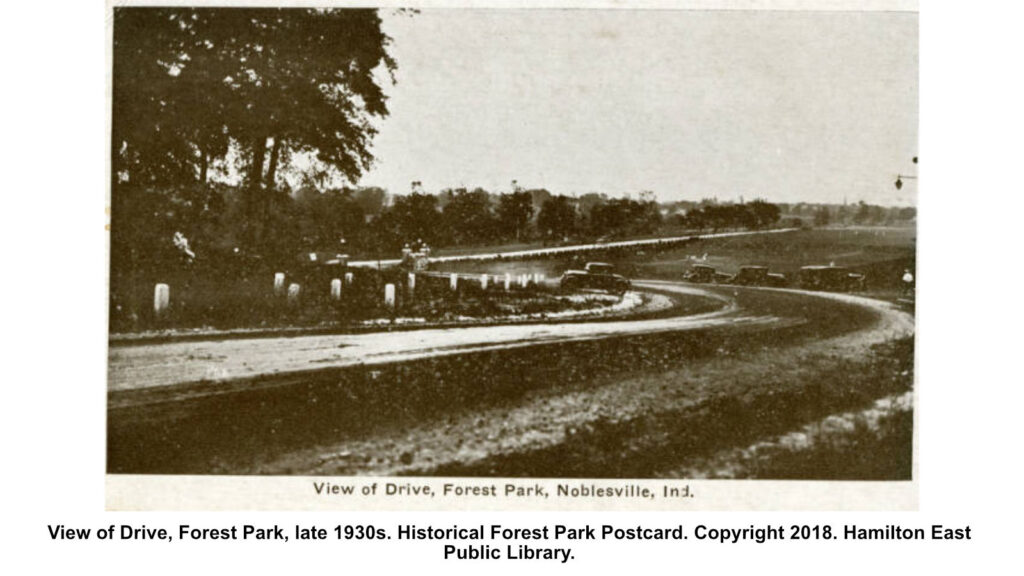
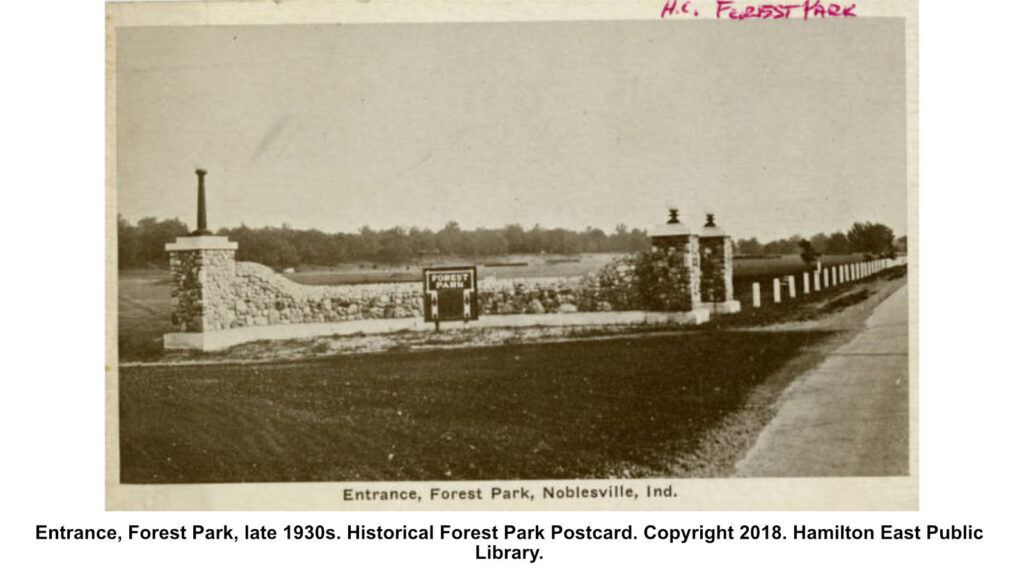
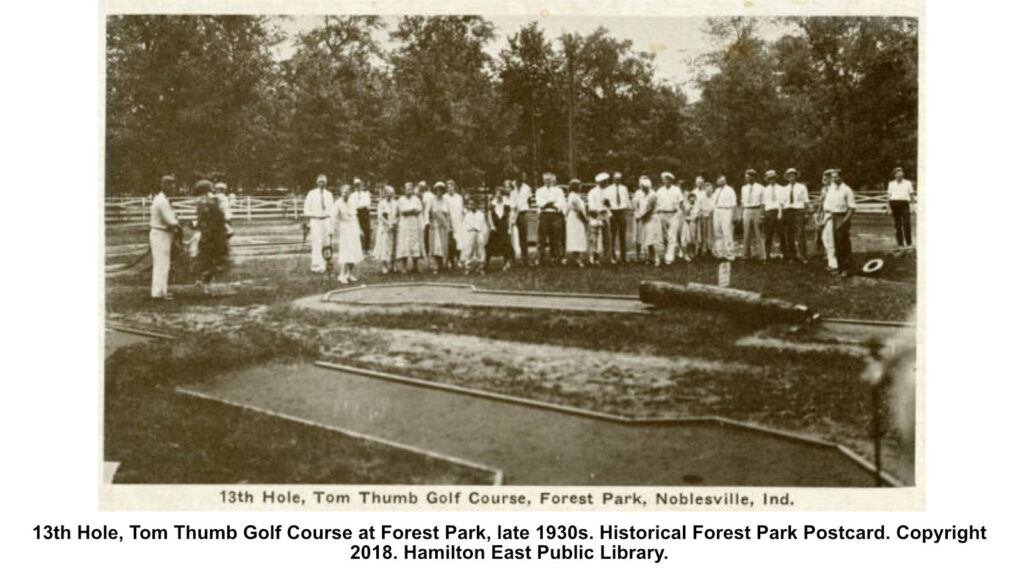
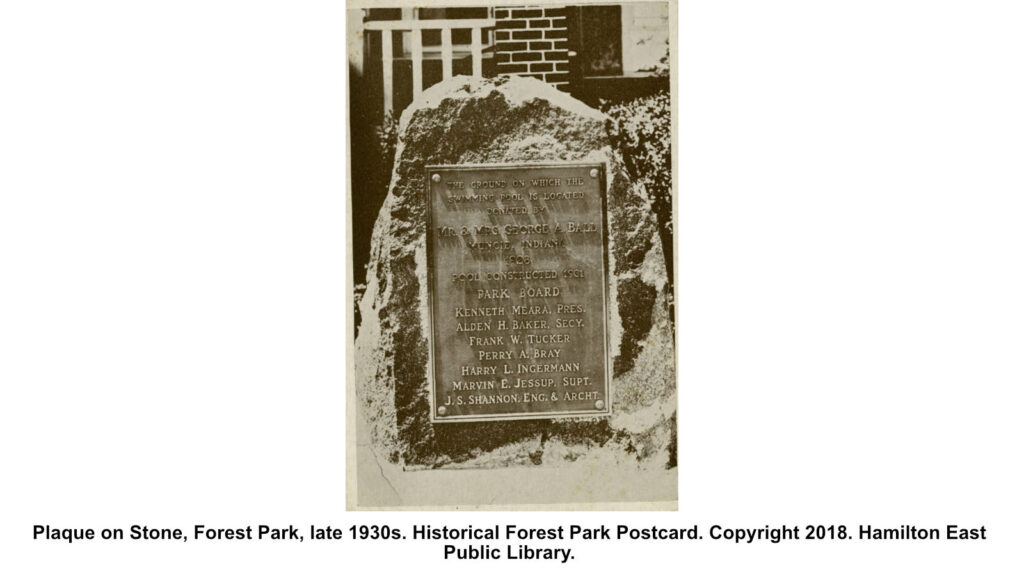
The next point of interest in this story is the Forest Park Golf Course. Again, it is several blocks away, so you can proceed there for stop 13 or listen to the information as you head to stop 14 at 810 Conner Street.

Nickel Plate Line Separator
Stop 13 Image

STOP 13
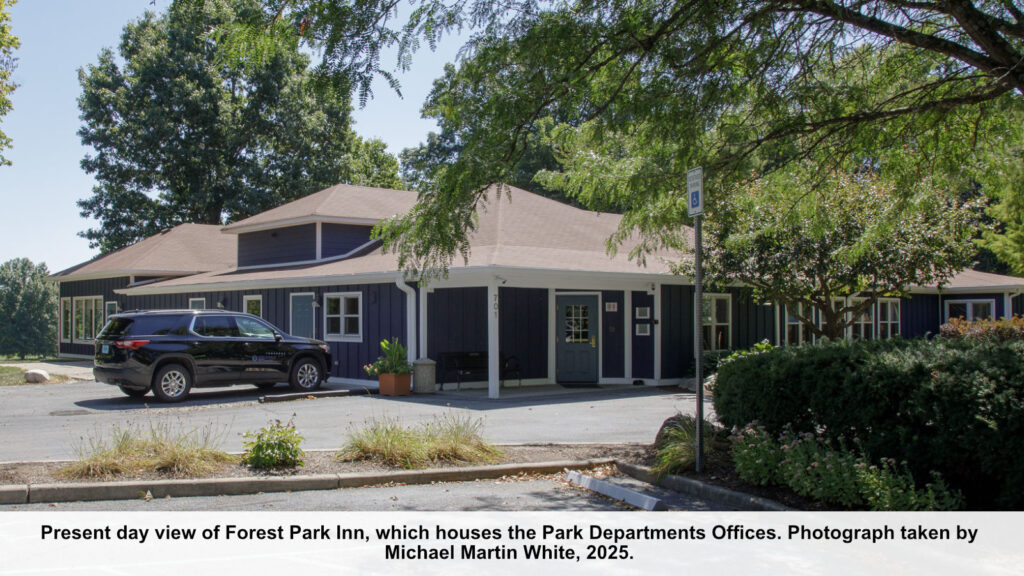
701 Cicero Road

album-art
00:00
Hide TranscriptShow Transcript

NEED STOP 13 TRANSCRIPT

Nickel Plate Line Separator
Stop 14 Image

STOP 14
810 Conner Street

album-art
00:00
Hide TranscriptShow Transcript

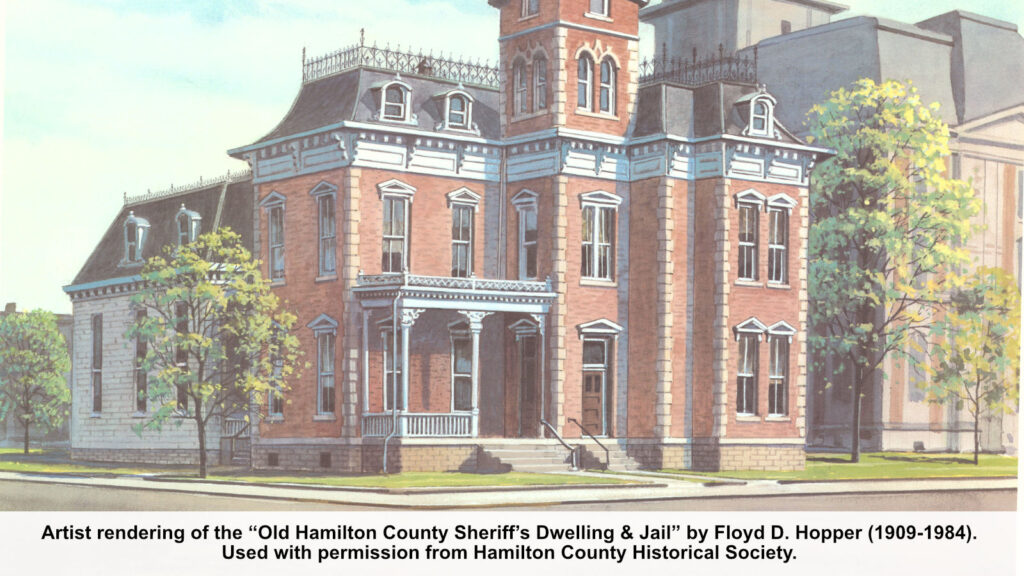
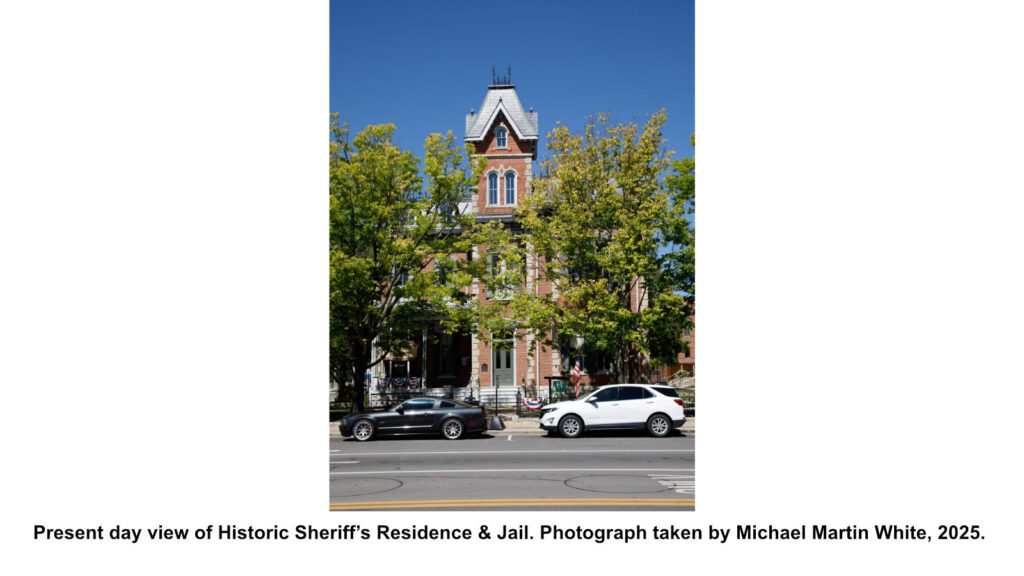
Stop 14 – Historic Sheriff’s Residence & Jail (810 Conner St.)

It’s safe to enter Noblesville’s historic Sheriff’s residence and Jail at 810 Conner Street; but only during open hours. We are happy to report that the Levinsons and this building had nothing to do with “jail time”.

This building houses the Hamilton County Historical Society and its museum. Make sure after this walking tour to visit to see the old jail, view notable Hamilton County items, and enjoy their collection of Levinson Family artifacts. HCHS’s mission is to preserve and interpret the history of Hamilton County and create interest, awareness, and appreciation of our history and be a clearinghouse for county wide historical preservation.

Nickel Plate Line Separator
Finale Image

Finale

album-art
00:00
Hide TranscriptShow Transcript

Finale Recording

This “Noblesville Icons: Levinson Family Walking Tour” project was made possible through Heritage Support Grant funding provided to the Hamilton County Historical Society by the Indiana Historical Society and made possible by Lilly Endowment, Inc.

This joint project combines the collective skills, artistry, and knowledge of Debbie Bennett, David Heighway, the Hamilton County Historical Society, Noblesville Creates, the Hamilton East Public Library in Noblesville, and the Noblesville Preservation Alliance. We invite you to find more stories about Noblesville’s history and impact by visiting each of these organizations. My name is Joshua Glasburn-Ruby and it has been my pleasure to be your guide to learning more about the amazing Levinson Family!
LW Donate Button
LW Feedback Button
Nickel Plate Line Separator

Acknowledgements

The “Noblesville Icons: Levinson Family Walking Tour” project was made possible through Heritage Support Grant funding provided to the Hamilton County Historical Society by the Indiana Historical Society and made possible by Lilly Endowment Inc.
Thank you for visiting!

Hamilton County Historical Society Logo 160h
Indiana Historical Society Logo 160h
Lilly Endowment Logo 160h